
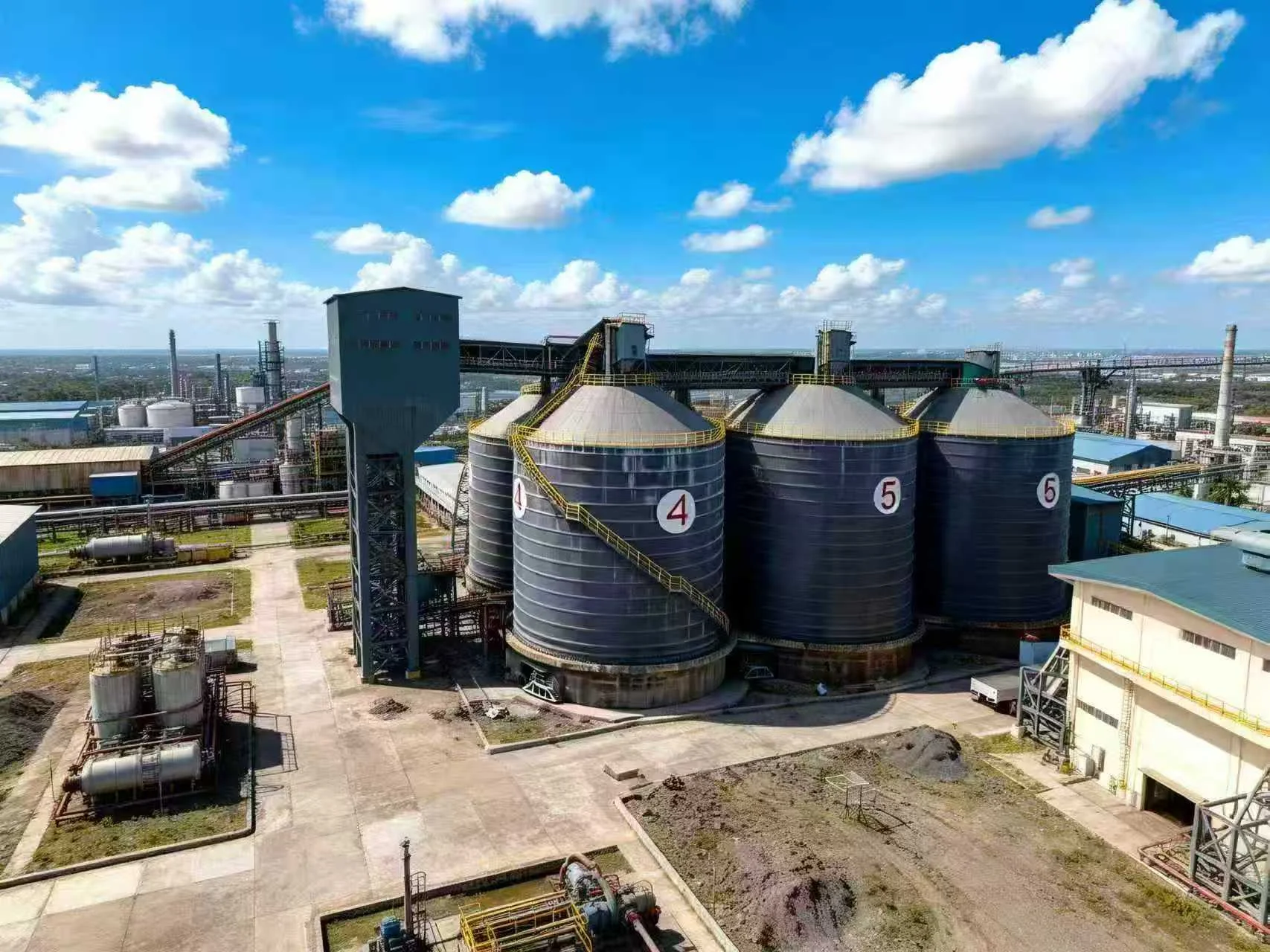
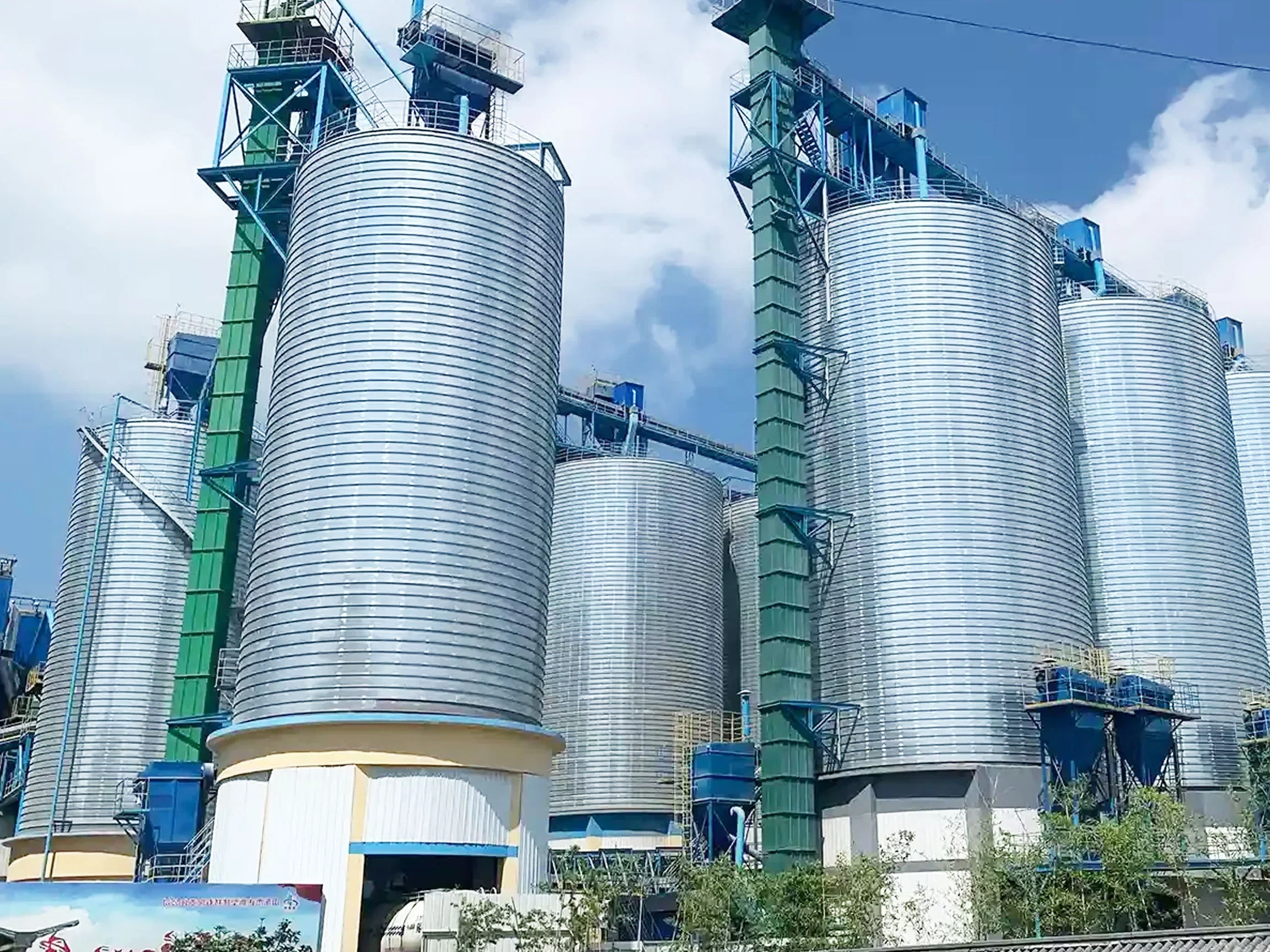



Structural Load Analysis and Safety Verification of Large Fly Ash Steel Silos
Feb Thu, 2026
Structural Load Analysis and Safety Verification of Large Fly Ash Steel Silos
Large fly ash steel silos are subjected to multiple types of loads during construction and operation. Accurate load analysis and structural verification are essential to prevent structural failure and ensure long-term safety.
Overview of Load Types in Silo Design
In the structural design of steel silos, both static and dynamic loads must be fully considered according to relevant design codes and actual operating conditions. The main load categories include:
1) Dead Loads
Self-weight of steel structure
Self-weight of process equipment and supporting structures
2) Live Loads
Roof live load: 0.5 kN/m²
Ash accumulation load: 1.0 kN/m²
Platform live load: 6.0 kN/m²
Walkway live load: 6.0 kN/m²
3) Stored Material Load
The stored material is fly ash with a process density of 0.8 t/m³. To ensure sufficient safety margin, the design unit weight for structural calculation is taken as 8.5 kN/m³.
4) Dynamic Loads
Dynamic loads generated by operating process equipment are applied by multiplying static loads with appropriate dynamic load coefficients.
5) Environmental Loads
Basic wind pressure: 0.54 kN/m² (50-year return period)
Basic snow pressure: 0.3 kN/m² (50-year return period)
Seismic action: Seismic intensity VII, design acceleration 0.15g
Finite Element Structural Verification
Based on the above load conditions and their combinations, finite element analysis was conducted for the steel silo structure. The analysis considered the combined effects of stored material load, live load, wind load, and seismic action.
The results show that:
Maximum structural stress: 261 MPa
Design strength of Q355B steel: 310 MPa
The maximum stress is well below the allowable design strength, confirming that the silo structure satisfies safety requirements.
Safety-Oriented Design Strategy
During the design process, particular attention was given to:
Structural weak points
Stress concentration areas
Long-term operational conditions
Reinforcement measures were applied where necessary to further improve structural reliability.
Engineering Significance
By comprehensively considering dead loads, material loads, live loads, and environmental actions, and by applying precise finite element analysis in accordance with design standards, the steel silo structure achieves a high level of safety and reliability.
This approach effectively reduces risks such as structural instability, excessive deformation, and fatigue damage, ensuring safe storage and stable operation throughout the silo’s service life.
Table of Contents
PDF
Download File
Manxing Industrial Silo Brochure
Manxing_Industrial_Silo_Brochure.pdf
Open the download form to unlock this file. The download will start automatically after submission.
Request a Quote
We are committed to providing you with exceptional service and ensuring a seamless buying experience. Please send us your inquiry, and we will respond with a detailed quotation.