
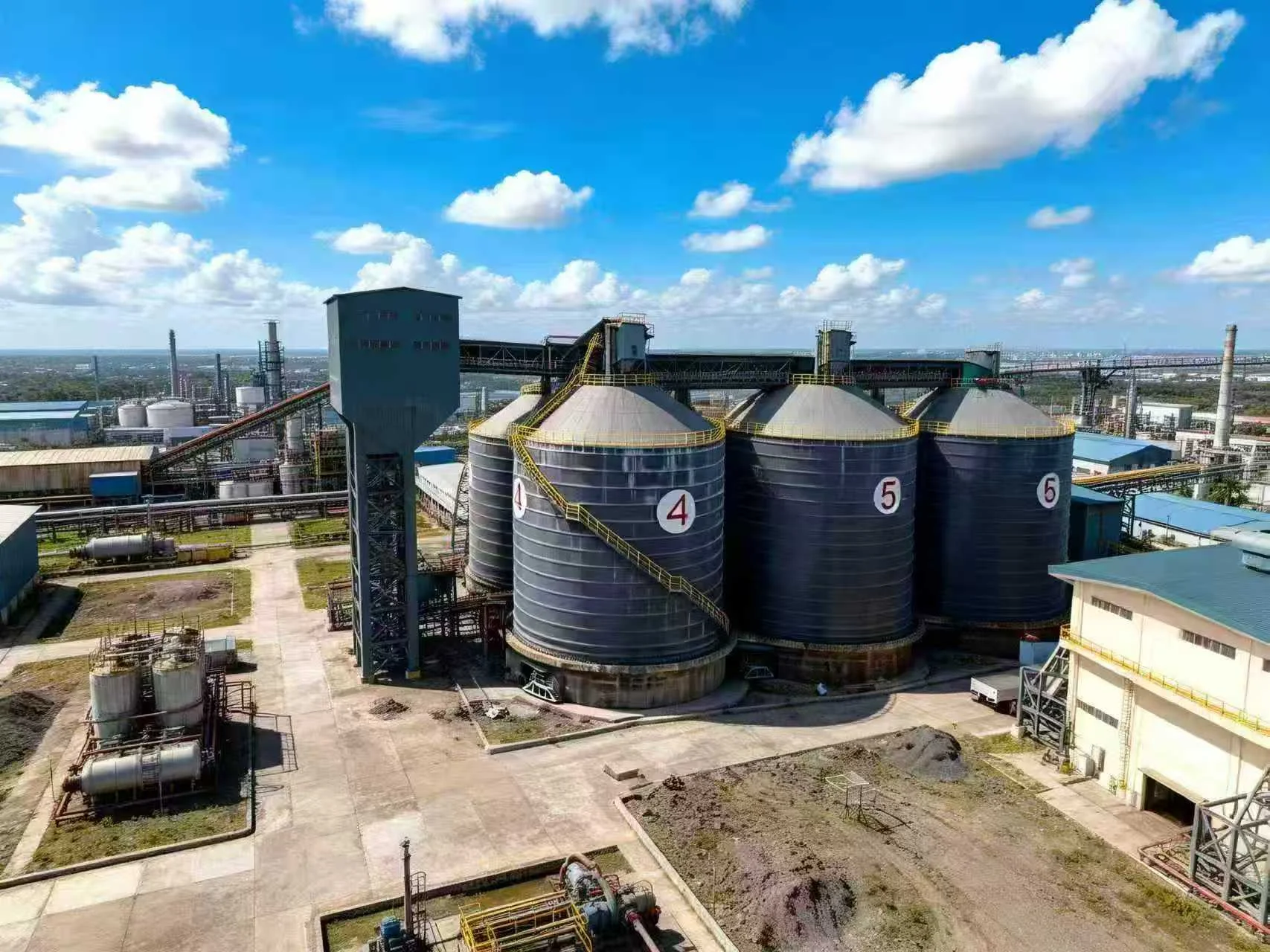
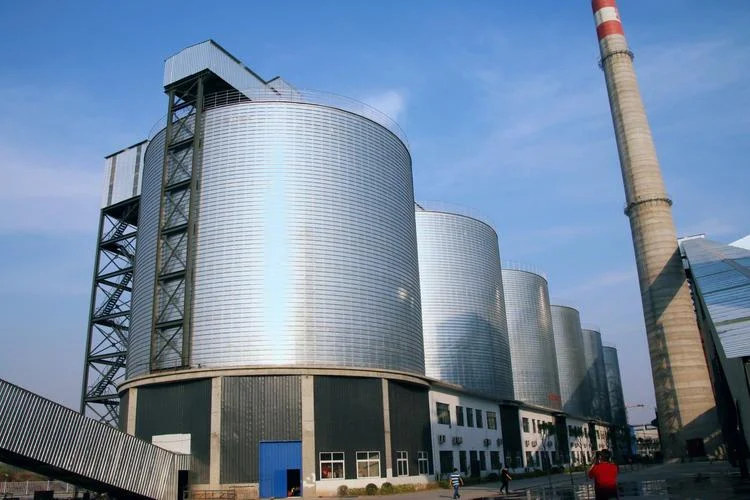


Facing tightening environmental regulations and the need for uninterrupted power generation, a 500MW coal-fired power plant successfully transformed its ash handling system. This case study details how a custom-engineered, modular bolted steel silo design achieved automated, dust-free storage and discharge of 150 tons of fly ash per day, providing a replicable technical blueprint for the industry.
The Critical Challenge of Fly Ash Storage in Power Plants
Fly ash, the primary byproduct of coal combustion, presents formidable storage challenges due to its fine particle size, high abrasiveness, tendency to become airborne, and hydraulic properties when exposed to moisture. Traditional open stockpiles or simple concrete bunkers not only cause severe dust pollution but also suffer from material caking due to water ingress, leading to discharge blockages and resource waste. Under the pressure of carbon neutrality goals and routine environmental inspections, power plants require an industrial silo system that is fully enclosed, automated, highly reliable, and compliant with seismic and wind load codes.
For the 500MW plant in this case, which produces approximately 150 tons of fly ash daily, the existing system could not provide the necessary buffer for seven days of continuous operation, making an upgrade imperative. The plant needed a solution that would eliminate fugitive dust emissions, prevent material hardening, and ensure consistent, trouble-free discharge—all while fitting within a constrained footprint adjacent to existing boiler infrastructure.
Project Requirements and Design Parameters: A Five-Dimensional Analysis
During the initial phase, our engineering team conducted a comprehensive audit of the plant's operating conditions, material characteristics, site constraints, and regulatory requirements. The core need extended beyond simple capacity to encompass deep system integration and long-term economic viability. The design parameters were developed around five key dimensions:
Core Capacity and Buffer: The system was required to provide at least seven days of storage at full load. Calculations determined a total effective silo capacity of no less than 1,000 tons was necessary to maintain production continuity during downstream transport outages or maintenance windows. This buffer capacity was critical for preventing forced plant derating.
Material Flow Assurance: Fly ash exhibits poor flow characteristics, including a tendency to bridge and rathole. The design incorporated a steep, mass-flow hopper configuration with a 70-degree cone angle and a 1.5-meter diameter outlet, paired with a pneumatic fluidizing discharge system to ensure reliable, first-in-first-out material movement without compaction.
Environmental Compliance: The silo was engineered as a fully sealed structure with a pulse-jet dust collector mounted on the roof, capable of maintaining outlet emissions below 10 mg/Nm³. All loading and unloading points were equipped with telescopic chutes and dust suppression shrouds to prevent airborne particle release during truck loading.
Structural Integrity and Safety: The silo was designed to withstand Zone IV seismic loads and a basic wind speed of 180 km/h, as per local building codes. A galvanized bolted steel construction was selected for its superior corrosion resistance in the acidic fly ash environment and its ability to be erected without hot work, reducing on-site fire risk.
Operational Automation: The system was integrated with the plant's existing DCS (Distributed Control System), allowing remote monitoring of silo level, discharge rate, dust collector pressure differential, and temperature. Automated fill sequencing and truck loading controls minimized operator intervention and human error.
Modular Bolted Steel Silo: The Optimal Structural Choice
After evaluating concrete, welded steel, and bolted steel options, the engineering team selected a modular bolted steel silo for its unique advantages. The bolted design allowed for rapid on-site assembly without specialized welding labor, reducing construction time by 40% compared to a welded alternative. The galvanized coating provides a 25-year maintenance-free service life in the corrosive fly ash environment, significantly lowering lifecycle costs.
Pneumatic Conveying and Discharge System Integration
Fly ash is conveyed from the electrostatic precipitator hoppers to the silo via a dense-phase pneumatic conveying system operating at 0.6 MPa. At the silo discharge, a combination of air cannons and fluidizing pads ensures consistent material flow to the rotary airlock valve, which meters ash into tanker trucks or a secondary conveying line. This closed-loop system eliminates all manual handling and fugitive dust release.
Key Takeaways
- Key Data: The 1,000-ton capacity bolted steel silo provides a 7-day buffer for a 500MW plant producing 150 tons of fly ash daily, ensuring uninterrupted power generation.
- Best Practice: Specify a 70-degree mass-flow hopper with pneumatic fluidizing discharge to reliably handle fine, cohesive fly ash and prevent bridging.
- Watch Out For: Avoid concrete bunkers or open stockpiles—moisture ingress causes hydraulic setting of fly ash, leading to permanent caking and discharge blockages.
- Pro Tip: Integrate the silo level monitoring and dust collector controls into the plant DCS for real-time operational visibility and automated truck loading.
- Bottom Line: A fully enclosed, automated bolted steel silo system is the most cost-effective and environmentally compliant solution for modern power plant ash handling.
Implementation Results and Operational Performance
Post-installation, the plant achieved zero fugitive dust emissions from the ash storage area, passing all environmental inspections with a 30% margin below the permitted particulate limit. The automated discharge system reduced truck loading time from 45 minutes to just 12 minutes per 40-ton load, increasing dispatch efficiency by 275%. The silo's mass-flow design eliminated all bridging incidents, achieving 100% discharge reliability over the first 18 months of operation.
The modular bolted construction was erected in just 21 days, compared to the 45-day estimate for a comparable concrete structure. Total project cost was 18% lower than the concrete alternative, with a calculated payback period of 2.3 years based on reduced maintenance, eliminated environmental fines, and improved ash sales revenue from consistent quality.
Frequently Asked Questions
Q: Why is bolted steel preferred over concrete for fly ash silos in power plants?
A: Bolted steel offers significant advantages in construction speed, corrosion resistance, and lifecycle cost. A bolted silo can be erected in 3-4 weeks without hot work, while concrete requires 6-8 weeks with extensive formwork and curing time. The hot-dip galvanized coating provides 25+ years of corrosion protection in the acidic fly ash environment, whereas concrete can suffer from chemical attack and spalling. Additionally, bolted silos are fully relocatable and expandable, offering future flexibility that concrete cannot match.
Q: How do you prevent fly ash from caking and blocking the silo discharge?
A: The critical design elements are a steep mass-flow hopper (minimum 70-degree cone angle) combined with pneumatic fluidizing pads and strategically placed air cannons. The mass-flow geometry ensures that all material moves downward uniformly, preventing stagnant zones where caking can occur. Fluidizing pads inject low-pressure air to reduce inter-particle friction, while air cannons deliver high-pressure bursts to dislodge any incipient bridges. The entire system is sealed to prevent moisture ingress, which is the primary cause of hydraulic setting in fly ash.
Q: What capacity should a fly ash silo have for a 500MW coal-fired power plant?
A: Industry best practice recommends a minimum of 7 days of full-load storage capacity. For a typical 500MW plant producing 150 tons of fly ash per day, this translates to an effective silo capacity of at least 1,000 tons. This buffer allows the plant to continue operating during planned maintenance of downstream ash handling equipment, truck loading delays, or temporary market disruptions in ash sales. Some plants opt for 10-14 days of capacity for additional operational resilience.
Q: How does a fly ash silo system integrate with existing power plant DCS controls?
A: Modern fly ash silo systems are designed with full DCS integration capability using standard communication protocols such as Modbus RTU or Profibus. Key parameters transmitted to the control room include continuous silo level measurement (via radar or load cells), dust collector pressure differential, discharge rate, and bin temperature. The DCS can automate fill sequencing from multiple precipitator hoppers, control truck loading based on weight setpoints, and trigger alarms for high level, high pressure drop, or abnormal temperature rise. This integration eliminates the need for dedicated local operators and provides real-time operational data for plant management.
Q: What environmental regulations apply to fly ash storage silos, and how do they comply?
A: Fly ash silos must comply with air quality standards for particulate matter emissions, typically limiting outlet concentrations to 10-20 mg/Nm³ depending on local regulations. Compliance is achieved through a roof-mounted pulse-jet dust collector with cartridge or bag filters, which captures dust from displaced air during filling. Additionally, all loading points must be equipped with telescopic chutes and dust shrouds to contain emissions during truck loading. The silo structure itself must be fully sealed, with all access hatches and inspection ports gasketed. Many jurisdictions also require continuous opacity monitoring on the dust collector exhaust stack.
Q: Can a fly ash silo be retrofitted into an existing power plant with limited space?
A: Yes, bolted steel silos are particularly well-suited for retrofit projects due to their modular design and small footprint relative to capacity. A 1,000-ton bolted silo typically requires a base diameter of only 8-10 meters, allowing installation in tight spaces between existing structures. The silo can be erected using a mobile crane without the need for extensive temporary works or demolition. The foundation can be a simple reinforced concrete ring or raft slab, designed to fit around existing underground utilities. Our engineering team routinely conducts 3D laser scanning of existing sites to design silos that fit precisely within available space constraints.
Need expert Manxing silos solutions for your power plant ash handling project?
We provide professional design, manufacturing, and installation services for fly ash storage and bulk material handling systems worldwide. Our engineering team has delivered over 200 silo projects for power plants, cement plants, and industrial facilities across 30 countries.
Get a Free Technical Consultation →