
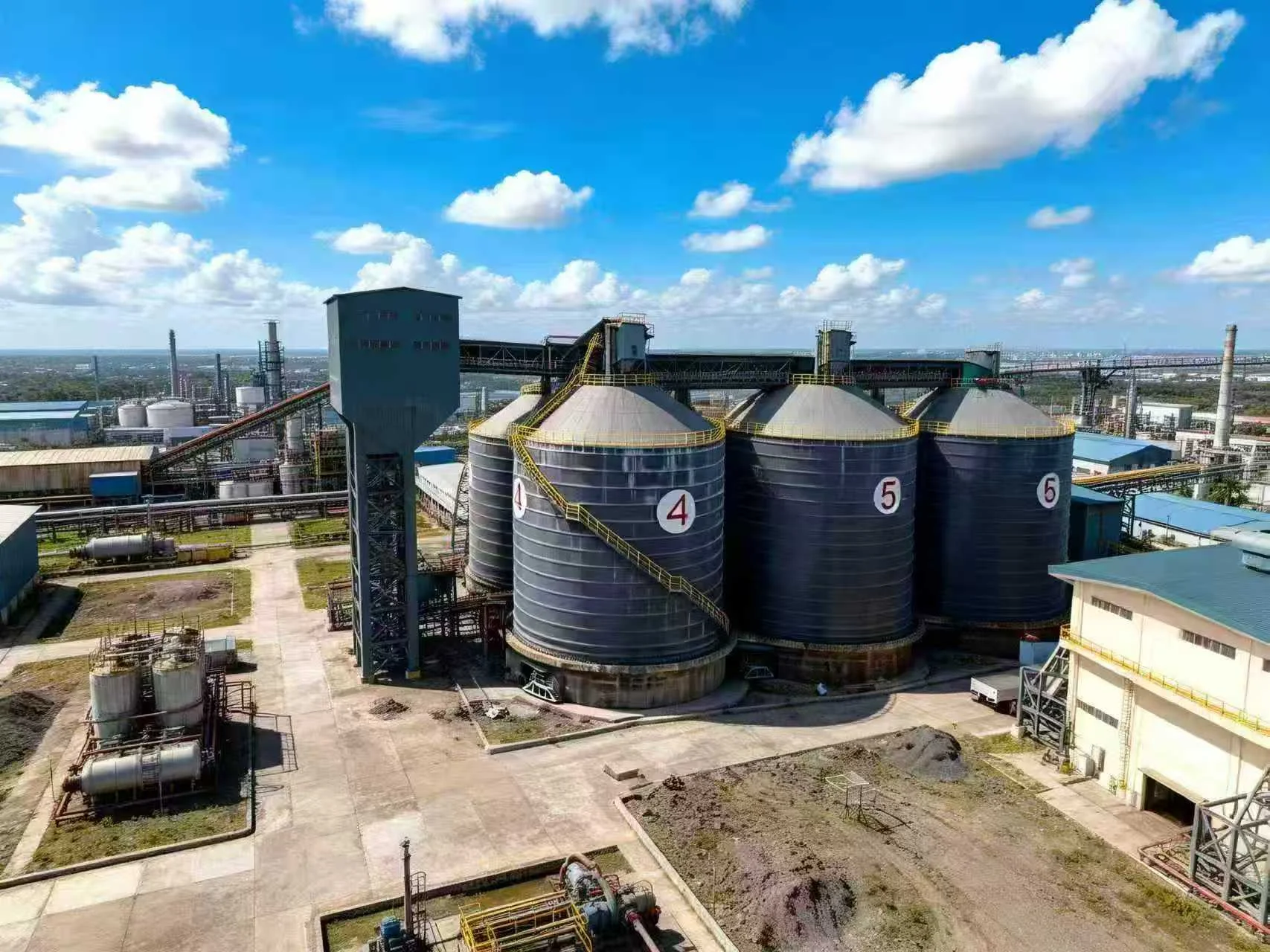
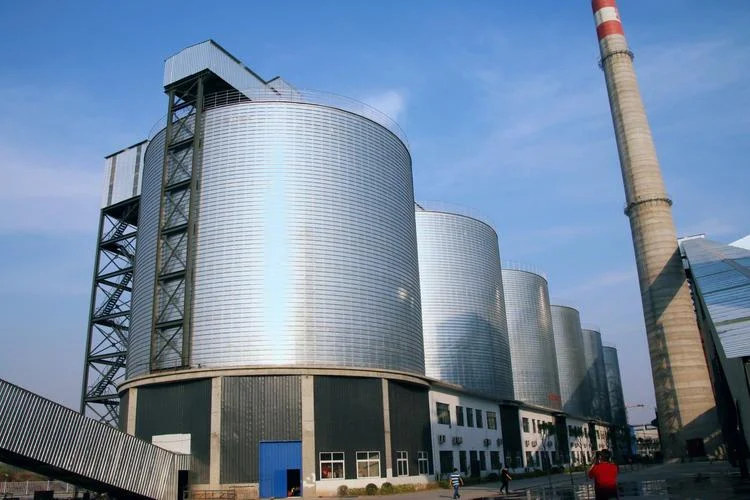


Fly ash silo maintenance is a strategic decision that directly impacts equipment lifespan and operational safety, not merely a routine checklist. Drawing on 15 years of industrial storage experience, this article provides a deep analysis of best practices for fly ash silo maintenance—from structural inspections to anti-blockage strategies—helping you prevent common failures and extend service life by addressing the unique challenges posed by this hygroscopic, fine-particle material.Related: Structural Load Analysis and Safety Verification of Large Fly Ash Steel Silos
rong>Core Challenges and Systematic Solutions in Fly Ash Silo Maintenance
Fly ash, a byproduct of coal-fired power plants, holds significant value in the cement, construction, and concrete industries. How
ever, its high hygroscopicity, fine particle nature, and tendency to compact under pressure create unique maintenance challenges. Common issues include arching and blockage that disrupt discharge, moisture ingress causing material hardening, and long-term corrosion leading to structural safety hazards. A systematic maintenance plan should cover the full lifecycle from daily inspections to deep overhauls, ensuring stable silo operation under harsh conditions.Industry survey data reveals that over 60% of fly ash silo failures stem from insufficient or improper maintenance. For instance, neglecting internal humidity monitoring can lead to condensation accumulation and widespread caking, while ignoring foundation settlement checks may cause structural tilting with catastrophic consequences. Establishing a scientific, actionable maintenance system is therefore the cornerstone of long-term silo reliability.
Preventing Structural Failure and Material Degradation Through Regular Inspections
Regular inspections form the first line of defense in fly ash silo maintenance. The inspection strategy should be structured into three tiers: daily visual checks, monthly specialized inspections, and annual deep assessments. Daily inspections focus on external signs of corrosion spots, weld cracks, or leakage. Monthly inspections require internal observation of material flow patterns, discharge consistency, and the condition of aeration pads or fluidizing systems. Annual deep assessments should involve ultrasonic thickness testing of the silo wall, foundation level surveys, and structural integrity analysis of support columns. This tiered approach ensures that minor issues are caught before they escalate into major failures, directly addressing the root causes of over 60% of fly ash silo failures.
Critical Inspection Points for Fly Ash Silos
Focus on three high-risk areas: the discharge cone, the roof structure, and the aeration system. The discharge cone is prone to abrasive wear and material buildup; check for smooth flow and absence of rat-holing. The roof structure must be inspected for watertight seals around access hatches and vent pipes, as even minor leaks can cause massive caking. The aeration system, including air knives and fluidizing pads, should be tested for uniform air distribution to prevent dead zones that lead to bridging.
Foundation and Structural Monitoring
Foundation settlement is a silent threat to fly ash silos. Install settlement markers at the base and monitor them quarterly. Any differential settlement exceeding 5 mm between adjacent columns warrants immediate investigation. For silos over 20 meters in height, consider installing tilt sensors that provide real-time data. Structural steelwork should be checked for signs of fatigue cracking, especially around weld joints and bolted connections, using magnetic particle inspection during annual assessments.
Key Takeaways
- Key Data: Over 60% of fly ash silo failures are caused by insufficient or improper maintenance, with moisture and foundation issues being the top two culprits.
- Best Practice: Implement a three-tier inspection system—daily visual, monthly specialized, and annual deep assessments—to catch problems early and extend silo life by 30-50%.
- Watch Out For: Neglecting internal humidity monitoring can lead to condensation buildup, causing widespread caking that can block discharge systems entirely.
- Pro Tip: Use ultrasonic thickness testing annually on the silo wall to detect corrosion thinning before it compromises structural integrity—this is especially critical in coastal or high-humidity environments.
- Bottom Line: A proactive, systematic maintenance plan is not optional—it is the single most cost-effective investment for ensuring fly ash silo longevity and operational safety.
Anti-Blockage Strategies and Material Flow Optimization
Blockage is the most frequent operational headache in fly ash silos, often caused by arching, rat-holing, or caking. Effective anti-blockage strategies combine design features with proactive maintenance. First, ensure the discharge cone angle is at least 60-70 degrees from horizontal to promote mass flow. Second, maintain the aeration system regularly—fluidizing pads should be checked for clogging and replaced every 2-3 years. Third, implement a "first-in, first-out" (FIFO) inventory rotation to prevent long-term material compaction. For silos experiencing persistent flow issues, consider retrofitting with air cannons or vibratory bin activators, but only after consulting a structural engineer to avoid damaging the silo shell. These measures can reduce discharge downtime by up to 40% and improve material quality by preventing hardened lumps from entering downstream processes.
Moisture Control and Corrosion Prevention
Moisture is the enemy of fly ash storage. Even small amounts of water ingress can cause fly ash to harden into concrete-like masses, rendering the silo unusable. Key moisture control measures include: installing desiccant breathers on vent pipes to prevent humid air from entering during discharge cycles; ensuring roof seals are inspected and replaced annually; and using heated aeration air in cold climates to prevent condensation. For corrosion prevention, apply a high-build epoxy coating to the interior surface, especially in the cone and lower wall sections. Cathodic protection systems can be considered for silos in aggressive environments. Regular corrosion mapping using ultrasonic thickness gauges should be part of the annual inspection, with a minimum wall thickness threshold of 80% of the original design specification before remedial action is required.
Frequently Asked Questions
Q: How often should we perform ultrasonic thickness testing on a fly ash silo?
A: Ultrasonic thickness testing should be performed at least annually as part of your deep assessment inspection. For silos in corrosive environments (coastal areas, high humidity, or where fly ash has high sulfur content), increase frequency to every six months. Focus testing on the lower third of the silo wall and the discharge cone, where abrasive wear and corrosion are most severe. Document all readings to track thinning trends over time.
Q: What is the most effective way to prevent fly ash from caking inside the silo?
A: The most effective approach combines three measures: (1) Install desiccant breathers on all vent pipes to block humid air entry during material discharge cycles; (2) Maintain a consistent aeration system with regular checks on fluidizing pads to ensure uniform air distribution; (3) Implement a strict FIFO inventory rotation, keeping storage time under 30 days whenever possible. For existing caking, use air cannons or mechanical rapping devices, but avoid excessive vibration that could damage the silo structure.
Q: How can we detect foundation settlement early before it causes structural damage?
A: Install permanent settlement markers at each support column base and survey them quarterly using a precision level. Any differential settlement exceeding 5 mm between adjacent columns requires immediate investigation. For taller silos (over 20 meters), consider installing electronic tilt sensors that provide continuous monitoring and send alerts if tilt exceeds 0.1 degrees. Also inspect the silo-to-foundation anchor bolts annually for signs of loosening or elongation, which can indicate movement.
Q: What are the signs that aeration pads need replacement?
A: Key indicators include: (1) Uneven material discharge, with some areas flowing faster than others; (2) Increased air pressure required to maintain fluidization, often 20-30% above normal operating pressure; (3) Visible material buildup on the pad surface during internal inspections; (4) Reduced discharge rates, typically dropping by 15-25% from baseline. Replace pads every 2-3 years as a proactive measure, or sooner if any of these symptoms appear. Always use pads made from materials compatible with fly ash’s abrasive and alkaline nature.
Q: Can we retrofit an existing fly ash silo with air cannons to solve blockage issues?
A: Yes, retrofitting air cannons is a common and effective solution, but it must be done carefully. First, conduct a structural analysis of the silo shell to determine safe mounting locations and ensure the silo can withstand the impulse forces. Typically, air cannons are installed in the discharge cone area, spaced 90-120 degrees apart. Use a low-pressure, high-volume system (2-6 bar) to avoid damaging the silo wall. Consult a structural engineer before installation, and always test the system at reduced pressure first to verify flow improvement without causing shell deformation.
Q: What is the recommended minimum wall thickness for a fly ash silo before it needs repair?
A: The industry standard is that wall thickness should not fall below 80% of the original design specification. For example, if the silo was built with 6 mm steel plate, the minimum acceptable thickness is 4.8 mm. However, this threshold may be higher for silos in seismic zones or those handling materials with high abrasion. Use ultrasonic thickness testing to create a corrosion map of the entire silo, paying special attention to the lower wall and cone areas. If any single location falls below 80%, plan for localized patching or full section replacement within 6 months.
Need expert fly ash silo maintenance solutions for your project?
We provide professional design, manufacturing, and installation services for bulk storage and material handling systems worldwide. Our team has over 15 years of experience in fly ash silo engineering, from structural inspections to anti-blockage retrofits.
Get a Free Technical Consultation →