
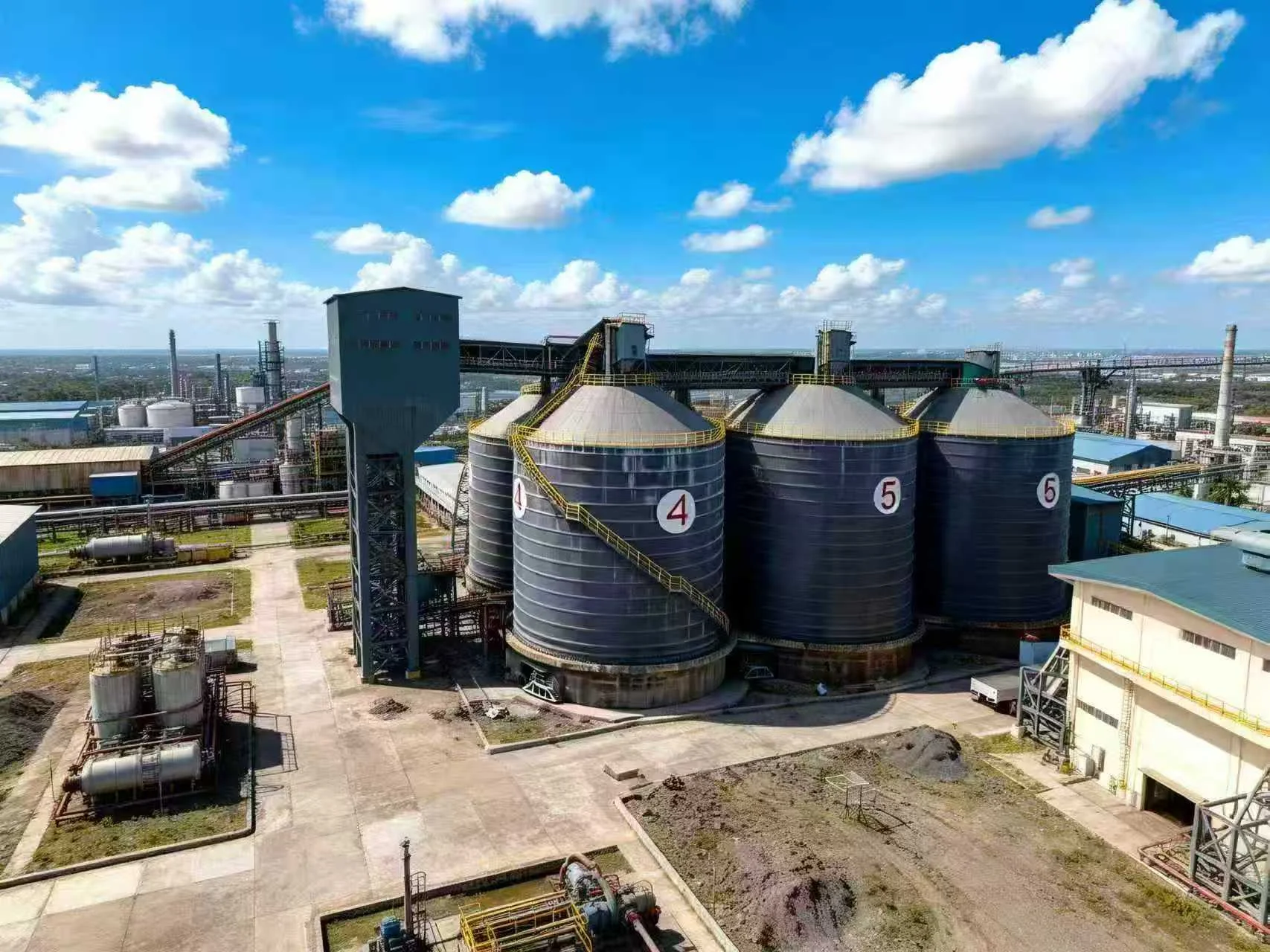
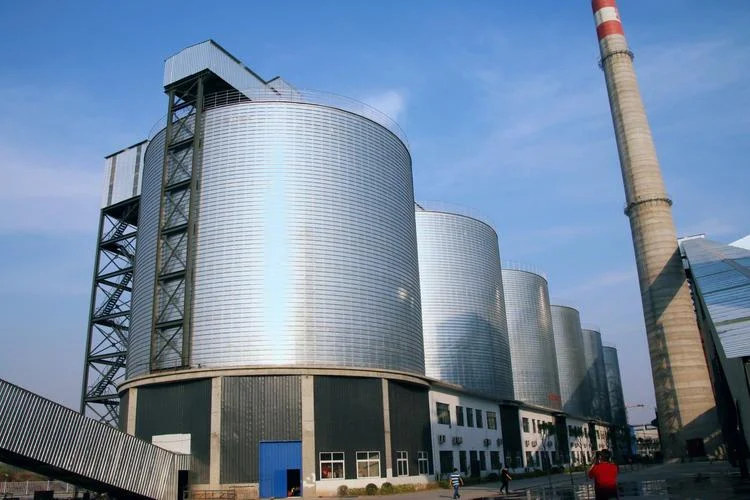


Designing a fly ash silo that delivers consistent, trouble-free discharge requires more than standard bulk storage formulas. This practical guide, grounded in 15 years of industrial engineering experience, provides a complete design framework—from material property analysis to structural optimization—to help engineers avoid common flow problems and achieve efficient, cost-effective fly ash storage systems.
Understanding Fly Ash Material Properties: The Foundation of Silo Design
Fly ash, a primary byproduct of coal-fired power plants, is widely used as a pozzolanic additive in cement and concrete. How
ever, its particle size typically ranges from 1 to 100 microns, and it contains a high proportion of spherical glassy particles, resulting in an extremely high internal friction angle and significant electrostatic effects. These characteristics make fly ash highly prone to arching, rat-holing, and segregation during storage. Before design begins, critical parameters must be obtained through laboratory testing: bulk density (typically 600–1,200 kg/m³), angle of repose (35°–50°), moisture content (even exceeding 1% significantly reduces flowability), and shear strength.A frequently overlooked point is that the flow properties of fly ash deteriorate over storage time, especially when temperature fluctuations cause condensation, potentially forming hard lumps that are difficult to break. In a real-world project designing fly ash silos for a 2-million-ton-per-year cement plant, we used a ring shear tester and found that the fly ash still exhibited a high internal friction angle at 0.8% moisture content. This data point directly determined the subsequent hopper angle and discharge opening size, preventing flow channel blockages that would have resulted from incorrect assumptions.
Optimizing Silo Geometry: Achieving Mass Flow Over Funnel Flow
For a high-cohesion material like fly ash, mass flow design should be prioritized. In mass flow, all material moves downward simultaneously along the silo walls, eliminating stagnant zones that lead to rat-holing and spoilage. Achieving this requires a steep hopper angle—typically 60° to 70° from horizontal—combined with a smooth, low-friction interior lining such as stainless steel or ultra-high molecular weight polyethylene (UHMWPE). The discharge opening must be large enough to prevent arch formation; for fly ash, a minimum opening dimension of 600 mm is often recommended, though this must be verified against the measured cohesive strength using the Jenike method.
Funnel flow, where only a central channel empties while surrounding material remains static, is a common but costly mistake. It leads to first-in, last-out discharge, material degradation, and unpredictable flow rates. In one retrofit project, we converted a funnel flow silo to mass flow by increasing the hopper angle from 45° to 65° and adding a 2 mm thick UHMWPE liner. The result was a 40% improvement in discharge consistency and elimination of manual rodding interventions.
Hopper Angle and Discharge Opening Design
The hopper angle must exceed the material's wall friction angle by a safety margin of at least 5° to 10°. For fly ash with a measured wall friction angle of 30° against carbon steel, a 60° hopper is the minimum. The discharge opening size should be at least 2.5 times the critical arching span calculated from the material's cohesive strength. Using a safety factor of 3 is prudent for variable-quality fly ash from different power plants.
Lining Material Selection for Flow Assurance
Stainless steel (304 or 316) offers excellent corrosion resistance and a low coefficient of friction, but it is expensive. UHMWPE provides a cost-effective alternative with a friction coefficient as low as 0.08 against fly ash, though it has lower temperature resistance. For applications where fly ash temperature exceeds 80°C, stainless steel or a ceramic-lined hopper is mandatory. We recommend testing the actual wall friction angle with the chosen lining material before finalizing the geometry.
Key Takeaways
- Key Data: Fly ash bulk density ranges from 600–1,200 kg/m³; angle of repose from 35°–50°; even 1% moisture significantly impairs flowability.
- Best Practice: Always conduct ring shear testing on the specific fly ash sample before design—never rely on generic literature values.
- Watch Out For: Funnel flow designs that create dead zones, leading to rat-holing, material degradation, and unpredictable discharge.
- Pro Tip: Use a minimum hopper angle of 60° with a UHMWPE or stainless steel liner to ensure mass flow for high-cohesion fly ash.
- Bottom Line: Proper material characterization and mass flow geometry are non-negotiable for reliable, long-term fly ash silo performance.
Structural Design Considerations for Fly Ash Silos
Fly ash silos must withstand not only the static load of the stored material but also dynamic loads during filling and discharge. The high bulk density of fly ash (up to 1,200 kg/m³) means that a 1,000-tonne silo exerts a significant vertical load on the foundation. Engineers must calculate the lateral pressure distribution using Janssen's equation, but with modifications for the material's cohesive nature. Overestimating lateral pressures can lead to unnecessarily thick walls, while underestimating risks structural failure.
Wind and seismic loads are critical for tall, slender silos. In regions with high seismic activity, the sloshing effect of the stored material can amplify forces. We recommend a minimum wall thickness of 6 mm for bolted steel silos up to 12 m in diameter, with stiffening rings at intervals of 2–3 m. The discharge cone must be reinforced to handle the concentrated load from the material column above. In a project for a Middle Eastern cement plant, we used finite element analysis (FEA) to optimize the stiffener layout, reducing steel weight by 12% while maintaining a safety factor of 1.8.
Accessories and Discharge Aids for Reliable Operation
Even with optimal geometry, fly ash can occasionally bridge or compact. Discharge aids such as air cannons, vibrators, or fluidizing pads are often necessary. Fluidizing pads, which inject low-pressure air into the hopper to reduce friction, are particularly effective for fly ash but must be carefully designed to avoid air channeling. We recommend using porous stainless steel or ceramic pads with a pore size of 5–10 microns, spaced at 1–1.5 m intervals around the hopper. Air cannons should be triggered by pressure sensors or timers, not manual intervention, to ensure consistent operation.
Level indicators, pressure relief valves, and dust collection systems are mandatory for safety and environmental compliance. A rotary valve or screw feeder at the discharge outlet provides metered flow control. For high-throughput applications, a variable-speed drive on the discharge feeder allows precise adjustment of the material flow rate to match downstream process demands.
Frequently Asked Questions
Q: What is the minimum hopper angle required to ensure mass flow in a fly ash silo?
A: The minimum hopper angle depends on the wall friction angle between the fly ash and the lining material. For carbon steel, a 60° to 70° hopper angle (from horizontal) is typically required. If using a UHMWPE liner, the angle can sometimes be reduced to 55°, but this must be verified by ring shear testing. A safety margin of 5°–10° above the measured wall friction angle is standard practice.
Q: How does moisture content affect the flowability of fly ash in a silo?
A: Moisture content is the single most critical variable affecting fly ash flowability. Even a 1% increase in moisture can double the cohesive strength, leading to arching and bridging. At 0.8% moisture, we observed a high internal friction angle that necessitated a steeper hopper and larger discharge opening. Condensation from temperature fluctuations can increase moisture over time, so proper insulation and aeration are essential for long-term reliability.
Q: What are the advantages of mass flow over funnel flow for fly ash storage?
A: Mass flow ensures that all material moves downward simultaneously, eliminating stagnant zones that cause rat-holing and material degradation. It provides first-in, first-out discharge, which is critical for quality control when fly ash properties vary over time. Mass flow also prevents segregation of fine and coarse particles and reduces the risk of spontaneous combustion due to prolonged storage. Funnel flow, by contrast, leads to unpredictable discharge rates and frequent blockages.
Q: How do I calculate the required discharge opening size for a fly ash silo?
A: The discharge opening size must exceed the critical arching span, which is calculated from the material's cohesive strength measured by a ring shear tester. A common rule of thumb is to make the opening at least 2.5 times the critical span, with a safety factor of 3 for variable-quality fly ash. For most applications, a minimum opening diameter of 600 mm is recommended, but this should be verified with actual material testing.
Q: What discharge aids are most effective for preventing blockages in fly ash silos?
A: Fluidizing pads are highly effective for fly ash because they inject low-pressure air to reduce wall friction and promote flow. They should be made of porous stainless steel or ceramic with a pore size of 5–10 microns and spaced 1–1.5 m apart. Air cannons are also useful for breaking bridges, but they should be automated with pressure sensors rather than relying on manual operation. Vibrators are less effective for cohesive fly ash and can cause compaction if overused.
Q: How does storage time affect fly ash properties, and how can I mitigate degradation?
A: Over time, fly ash can absorb moisture from the air, especially during temperature fluctuations that cause condensation. This increases cohesive strength and can form hard lumps. To mitigate this, insulate the silo to reduce temperature swings, install aeration pads to keep the material fluidized, and design for first-in, first-out discharge. For long-term storage, consider using a nitrogen blanketing system to prevent moisture ingress.
Need expert fly ash silo solutions for your project?
We provide professional design, manufacturing, and installation services for bulk storage and material handling systems worldwide. Our engineers have over 15 years of experience optimizing silo geometry and discharge systems for challenging materials like fly ash.
Get a Free Technical Consultation →