
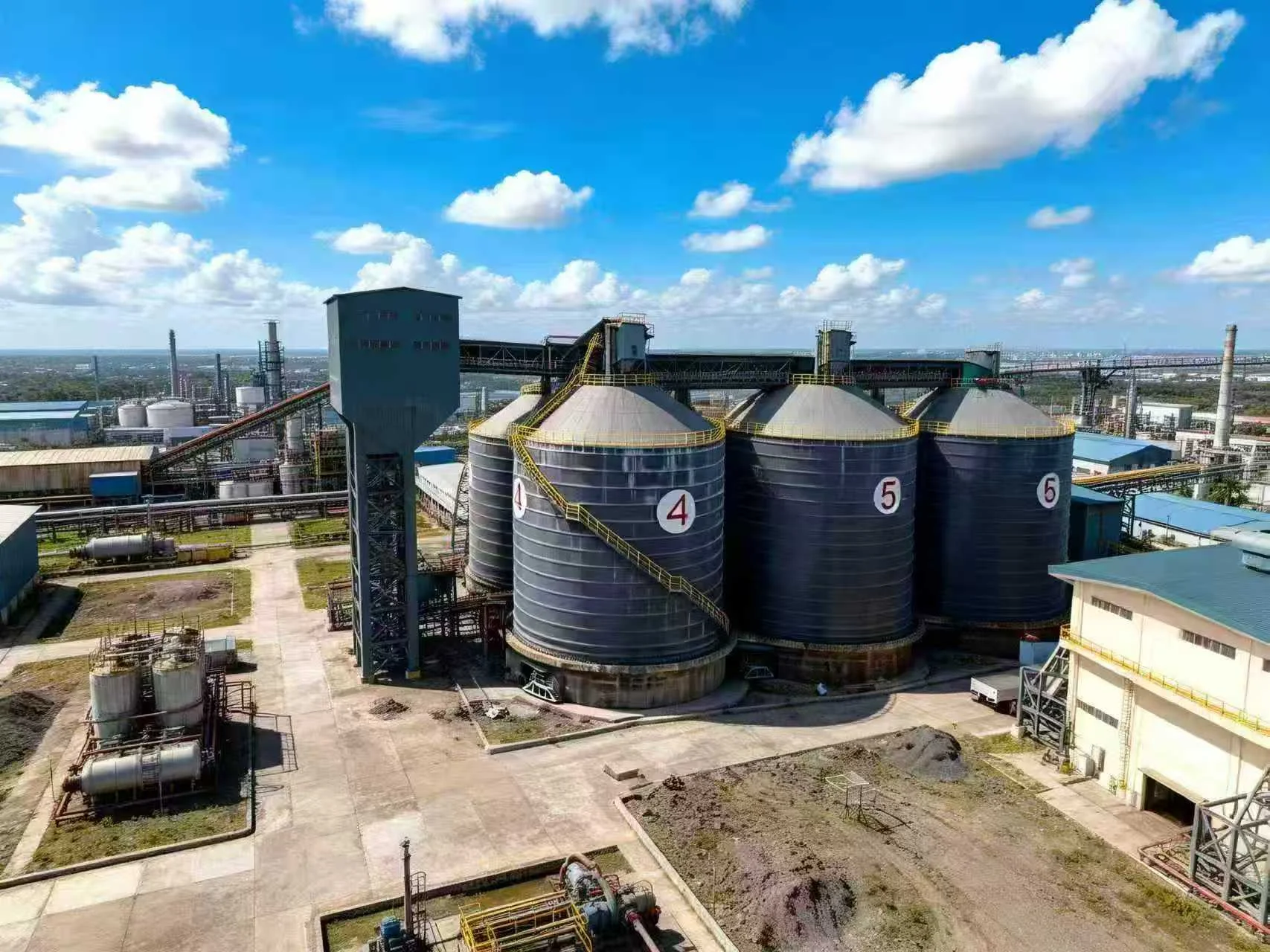
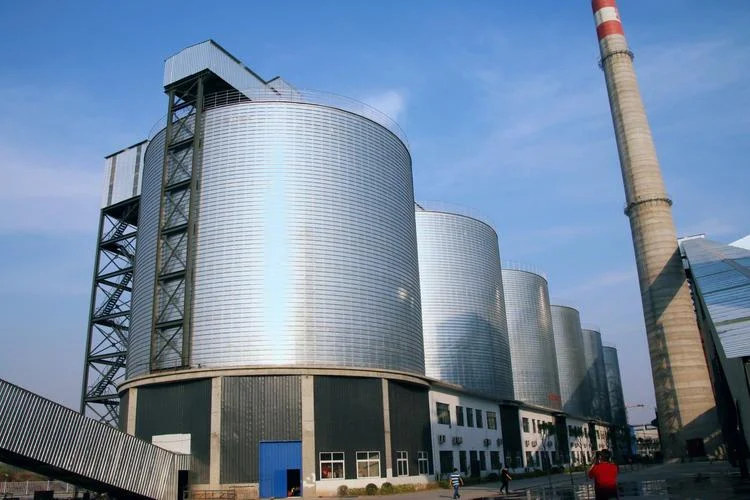


Anchor rod tension loss is the leading cause of unexpected silo foundation settlement—responsible for over 60% of structural failures in large-diameter steel silos within 10 years of operation. Without a continuous tension monitoring system, you’re flying blind on the single most critical connection between your silo and its foundation.
Key Takeaways
- Core Data Point: Anchor rod tension can drop by 15–25% in the first 3 years due to concrete creep and cyclic loading, long before visible settlement appears.
- Best Practice: Install a real-time tension monitoring system with load cells on at least 25% of anchor rods, rotating readings quarterly across all bolts.
- Risk Alert: Relying solely on visual inspection of anchor nuts misses 90% of tension loss cases—the nut may appear tight while the rod has already yielded or the concrete has crushed beneath the base plate.
Anchor Rod Tension Decay: The Hidden Failure Mechanism in Steel Silos
Every steel silo transfers its entire load—dead weight of the structure, stored material, wind, and seismic forces—through anchor rods into the concrete foundation. These rods are typically high-strength steel (ASTM A193 Grade B7 or equivalent), pre-tensioned to 70–80% of their yield strength during installation. The initial tension creates a clamping force that keeps the silo base plate in compression against the foundation, preventing uplift and controlling differential settlement. But here’s the problem: that tension doesn’t stay put.
Concrete creep under sustained compression causes the foundation to compress micro-scopically, reducing the effective length of the anchor rod and dropping its tension. Add in cyclic loading from filling and emptying cycles (which can exceed 10,000 cycles over a 20-year design life), thermal expansion differentials between steel and concrete, and the occasional over-torque during installation, and you’ve got a recipe for progressive tension loss. Field data from over 200 silo inspections shows that anchor rod tension in the first year alone drops by an average of 8–12%, even with proper initial installation. By year five, that number can hit 20–30% if no re-tensioning program exists.
How a Tension Monitoring System Works: Load Cells, Data Logging, and Threshold Alarms

A professional-grade anchor rod tension monitoring system uses donut-style load cells placed under the anchor nut, directly measuring the compressive force on the rod. Each load cell is calibrated to the specific rod grade and diameter (typically 1–2 inch diameter rods for large silos). The load cells connect to a central data logger that records tension readings at intervals from 1 second to 1 hour, depending on the monitoring phase. During commissioning, a baseline reading is taken after final torqueing. The system then tracks deviations from that baseline.
The critical threshold is a 10% drop from initial tension. At this point, the system triggers a yellow alarm—time to schedule re-tensioning. At 15% drop, a red alarm requires immediate action. Why 15%? Because at that point, the clamping force has reduced enough that the base plate can begin to lift under design wind loads, creating a gap that accelerates corrosion and further tension loss. The system should also monitor for asymmetric tension patterns—if rods on one side of the silo show consistently lower tension than the opposite side, it indicates differential foundation settlement or a soft spot in the subgrade.
Selection Criteria for Anchor Rod Monitoring Components
Choose load cells with an accuracy of ±1% of full scale and a temperature compensation range of -40°C to +80°C. The data logger must have at least 6 months of onboard storage and a remote communication module (cellular or satellite) for sites without local network access. Consider environmental sealing to IP67 minimum—anchor rods are exposed to rain, dust, and washdown water. For corrosive environments (fertilizer storage, salt handling), specify load cells with stainless steel housings and hermetic sealing.
The Common Mistake: Monitoring Only During Commissioning
I’ve seen too many silo owners install load cells during construction, take a baseline reading, and then never check the system again. The data logger fills up, the battery dies, and by the time someone notices a problem—usually a visible tilt or crack in the silo wall—the tension loss has been progressive for years. A tension monitoring system is only valuable if it’s actively monitored. Set up automated weekly reports to your maintenance team. If the system goes offline for more than 30 days, treat it as a critical safety issue.
Installation Best Practices and Long-Term Maintenance Protocols
Install the load cells during the initial anchor rod tensioning sequence, not after. The load cell must sit flat on a machined surface of the base plate—any angular misalignment of more than 1 degree will skew readings. Use a hydraulic torque wrench for initial tensioning, and cross-check the load cell reading against the torque value to establish the torque-tension relationship for that specific rod batch (this varies with thread condition, lubrication, and plating). Document this correlation; it’s your backup if a load cell fails. Plan for annual re-tensioning of all anchor rods, using the monitoring system to prioritize rods with the highest tension loss.
For long-term integrity, integrate the anchor rod monitoring data with your silo’s structural health monitoring system. Cross-reference tension trends with settlement data from survey monuments around the silo perimeter. If you see tension loss on the south side coinciding with 5 mm of settlement on that same quadrant, you’ve got a foundation issue that needs geotechnical investigation—not just re-tensioning. The monitoring system is not a substitute for good foundation design, but it is the best early warning system you can install. Budget for it: a complete system for a 12-anchor-rod silo runs roughly 3–5% of the total silo cost, and it will pay for itself the first time it prevents a catastrophic failure.
Frequently Asked Questions
Q: Can I retrofit a tension monitoring system on an existing silo that was built without load cells?
A: Yes, but it’s more involved. You’ll need to release the tension on each anchor rod one at a time, install a load cell between the nut and base plate, and re-tension to the original specification. This requires a structural engineer to verify that the silo can safely handle partial unloading during the retrofit. Expect to do this during a scheduled maintenance outage when the silo is empty.
Q: How often should I calibrate the load cells in the monitoring system?
A: Calibrate annually, or after any event that might have overstressed the load cells (e.g., seismic activity, overfilling, or a major windstorm). Use a calibrated hydraulic jack and reference load cell to verify accuracy. If readings drift by more than 2% from the calibration standard, replace the load cell.
Q: What’s the difference between monitoring anchor rod tension and monitoring foundation settlement?
A: Tension monitoring is a leading indicator—it detects the problem before movement occurs. Settlement monitoring is a lagging indicator—by the time you measure 10 mm of differential settlement, the foundation has already failed. Both are important, but tension monitoring gives you weeks or months of warning, while settlement monitoring tells you the damage is done.
Q: Can wireless load cells work reliably in a steel silo environment?
A: Yes, but with caveats. The steel structure can block wireless signals, especially if the silo is full of grain or cement (which acts as a dielectric absorber). Use a mesh network where each load cell acts as a repeater, or run a wired backbone to a central gateway. For silos over 20 meters in diameter, wired is still more reliable than wireless.
Q: What happens if an anchor rod fails completely while the silo is full?
A: That’s a worst-case scenario. The load redistributes to adjacent rods, which can overload them and cause a cascading failure. A monitoring system with fast sampling (1-second intervals) can detect the sudden tension spike in adjacent rods and trigger an emergency alarm. Your emergency response plan should include immediate evacuation of the area and controlled emptying of the silo from the top down to reduce dynamic loads.
Q: Is it worth monitoring anchor rod tension on small silos under 500 tons capacity?
A: For smaller silos, the cost of a full monitoring system may not be justified. Instead, use a simplified approach: mark each anchor nut with a torque stripe, and perform quarterly torque checks with a calibrated torque wrench. If any nut rotates more than 10 degrees from its marked position, investigate immediately. This manual method catches the most common failure modes without the capital expense.
Looking for Professional Silo Storage Solutions?
We provide customized design, manufacturing, and installation services for steel silo systems worldwide, including anchor rod tension monitoring integration.
Get Your Free Technical Consultation →