
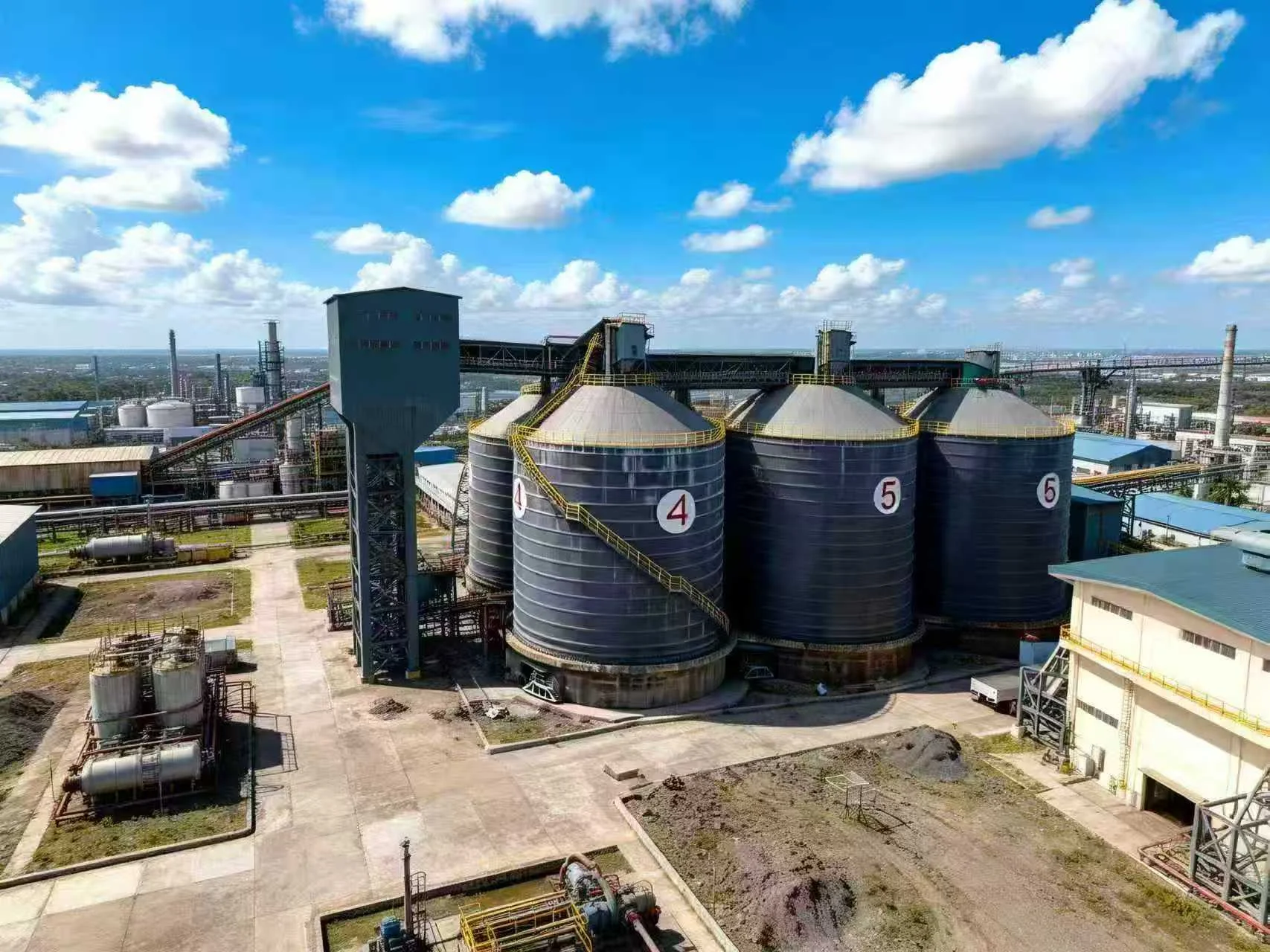
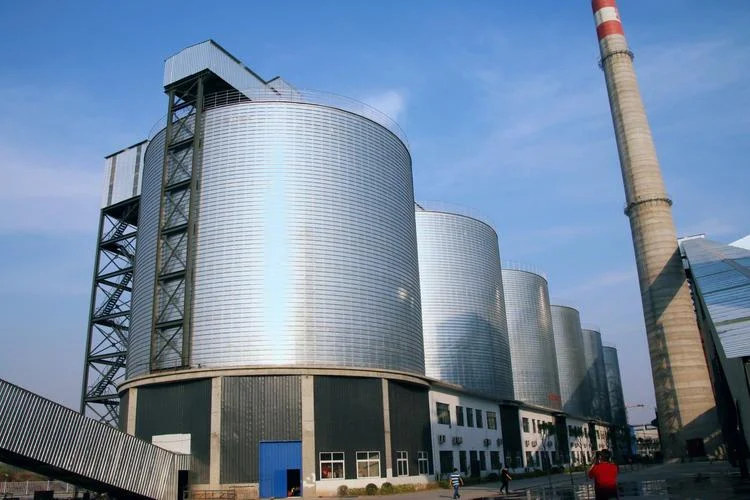


Dust emissions at silo conveyor transfer points are a leading cause of material loss, equipment wear, and regulatory non-compliance in bulk handling operations. Industry data shows that poorly designed transfer points can account for up to 40% of fugitive dust in a processing facility. This article provides engineering professionals with practical design strategies to achieve dust-free material handling, drawing on field-tested solutions for cement, fly ash, and mineral storage systems.
Understanding Dust Generation Mechanisms at Silo Conveyor Transfer Points
Dust is generated primarily by air entrainment and material impact during transfer. When bulk material falls from a conveyor onto a chute or into a silo inlet, air is dragged along with the falling stream. The velocity differential between the material and the surrounding air creates turbulence, which suspends fine particles. For materials like fly ash or cement, where particles below 10 microns constitute a significant fraction, this effect is especially pronounced. Our field measurements at a 500-ton fly ash silo installation showed that without proper design, air induction rates can reach 1.5 cubic meters per minute per ton of material handled.
The second major contributor is impact-induced dust. When material strikes a chute wall or accumulates at the transfer point, particle fracture and re-entrainment occur. The severity depends on material friability, drop height, and impact angle. For example, transferring clinker from a belt conveyor into a silo with a 6-meter drop height can generate measurable respirable dust levels exceeding 10 mg/m³ without mitigation. Understanding these mechanics is the first step toward effective control.
Engineering the Transfer Chute for Dust Suppression

The transfer chute is the critical interface between conveying equipment and the silo. A well-designed chute minimizes air entrainment and material degradation. We recommend a curved or "hood and spoon" chute profile that maintains a controlled material stream velocity and reduces free-fall distance. For a cement silo application handling 200 tons per hour, switching from a straight drop chute to a curved design reduced visible dust emissions by approximately 70%. The key parameters include chute angle (typically 55-65 degrees for free-flowing materials) and a discharge velocity that matches the receiving conveyor speed within 1-2 m/s.
Selecting the Right Skirt Board and Sealing System
Skirt boards at the transfer point must extend at least 300-500 mm beyond the impact zone to contain dust-laden air. Use adjustable rubber or polyurethane seals that maintain contact with the belt under varying load conditions. For high-temperature materials like clinker, silicon-based seals rated to 200°C are necessary. We have seen facilities reduce dust leakage by 90% simply by replacing worn seals and maintaining a 10-15 mm clearance between the skirt board and the belt surface.
Common Mistakes in Transfer Point Design
A frequent error is neglecting the settling zone. After the impact area, the chute must include a horizontal or slightly inclined section where air velocity drops below 1 m/s, allowing dust to settle back onto the material stream. Another oversight is undersizing the exhaust ducting for dust collection systems. A rule of thumb is to design for an air volume of 0.5-1.0 m³/min per meter of belt width, depending on material characteristics. Ignoring these factors leads to excessive dust loading on downstream filters and increased maintenance costs.
Key Takeaways
- Core Data Point: Proper transfer chute design can reduce fugitive dust emissions by up to 70% compared to straight-drop configurations.
- Best Practice: Implement a curved chute profile with a settling zone and maintain skirt board seals for optimal containment.
- Risk Alert: High drop heights above 4 meters without velocity control significantly increase dust generation and material degradation.
Integrating Dust Collection and Air Filtration Systems
Even with an optimized chute, some level of dust extraction is necessary for regulatory compliance, especially in confined spaces. We recommend locating the dust pickup point as close as possible to the material impact zone, typically within 600 mm of the chute inlet. For a 500-ton fly ash silo at a power plant, a cartridge-style dust collector with a filtration velocity of 1.0 m/min and a pressure drop of 1500 Pa proved effective in maintaining emissions below 5 mg/Nm³. The ductwork should be sized to maintain a transport velocity of 18-20 m/s for fine powders to prevent settling.
An often-overlooked aspect is the balance between exhaust airflow and material flow. Excessive suction can entrain valuable product, while insufficient flow allows dust to escape. We use a simple mass balance approach: calculate the air entrained by the falling material (approximately 0.3-0.5 m³ per kg of material for free-fall distances over 3 meters) and design the exhaust system to handle 1.2 times that volume. For installations handling multiple materials, such as powder and ore storage systems for mining projects, variable-speed fans are recommended to adjust to changing conditions.
Implementing Best Practices for Long-Term Dust Control
Sustainable dust control requires a holistic approach beyond initial design. Regular inspection of seals, chute wear liners, and dust collector filter condition is essential. We recommend a monthly checklist that includes measuring air velocity at the transfer point and checking for pressure differential across filters. For abrasive materials like clinker, ceramic-lined chutes can extend service life from 6 months to over 3 years. Additionally, consider installing a belt scraper at the head pulley to reduce carryback, which is a hidden source of dust accumulation. A well-maintained system not only meets environmental standards but also reduces material loss by up to 2% annually.
Training operators to recognize early signs of dust issues—such as visible haze, increased motor load on exhaust fans, or material buildup on walkways—can prevent minor problems from escalating. For facilities handling multiple products, such as those managing both fly ash and cement, understanding the key design differences between fly ash and cement silos helps in adapting transfer point parameters. Ultimately, investing in robust transfer point design pays for itself through reduced maintenance, lower product loss, and improved workplace safety.
Frequently Asked Questions
Q: What is the optimal drop height for a transfer chute feeding a silo to minimize dust generation?
A: There is no single optimal height, but the general engineering guideline is to keep free-fall distances below 3 meters whenever possible. For heights exceeding 3 meters, a curved chute that controls material velocity to under 3 m/s at the discharge point is critical. In our experience, heights above 6 meters without velocity control consistently produce dust levels that require extensive filtration. For existing installations with fixed heights, retrofitting a spiral or zigzag chute can reduce effective drop height and air entrainment.
Q: How do you calculate the required exhaust airflow for a transfer point handling abrasive powders like fly ash?
A: The calculation starts with estimating the induced airflow from the falling material. For fly ash with a bulk density of 0.7 g/cm³ and a drop height of 4 meters, induced air volume is roughly 0.4 m³ per kg of material. Multiply this by the material flow rate (e.g., 50 tons/hour = 13.9 kg/s) to get 5.6 m³/s. Then add a safety factor of 20% and account for any open areas around the transfer point. The final exhaust volume should be 6.7 m³/s, or 400 m³/min. Duct velocity must be maintained above 18 m/s to prevent settling of fine ash particles.
Looking for Professional Silo Storage Solutions?
We provide customized design, manufacturing, and installation services for steel silo systems worldwide, including dust-free transfer point engineering.
Get Your Free Technical Consultation →