
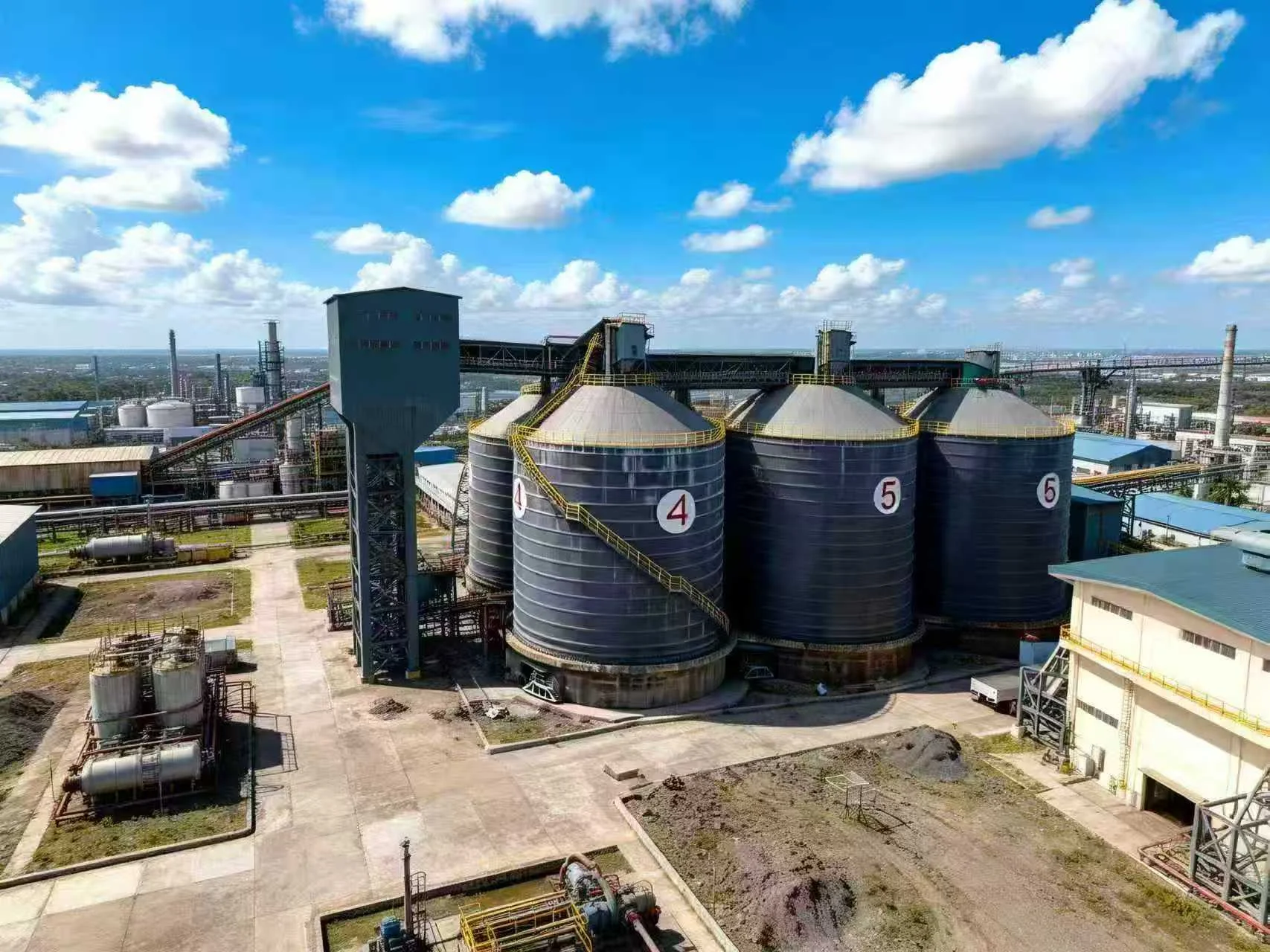
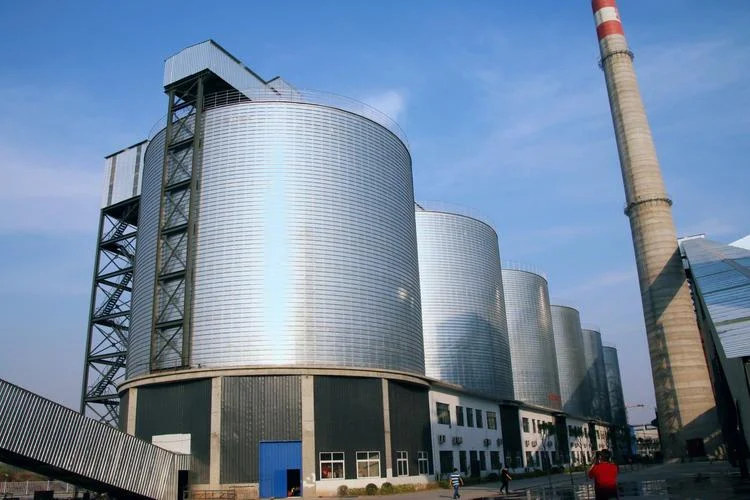


When designing a large diameter steel silo, engineers face a critical structural decision: internal or external stiffeners. The wrong choice can lead to costly material waste, flow obstructions, or even catastrophic buckling. With silos exceeding 15 meters in diameter, stiffener configuration directly impacts wall thickness requirements by up to 40% and dictates discharge reliability. Thi s article examines the engineering trade-offs based on over two decades of field data.
Structural Mechanics: How Stiffener Placement Affects Hoop Stress and Buckling Resistance
In large diameter silos, hoop stress from stored material—whether cement, clinker, or wood pellets—is the primary design load. Ext
ernal stiffeners, typically hot-rolled channels or angles welded to the silo wall, create a continuous ring that resists radial expansion. For a 20-meter diameter cement silo storing 800 kg/m³ material, external rings at 1.5-meter spacing can reduce wall plate thickness from 8 mm to 5 mm, a 37.5% steel savings. However, the stiffeners themselves must be designed for local buckling under wind loads, a factor often underestimated by less experienced teams.Internal stiffeners, by contrast, sit inside the material flow path. They provide similar hoop resistance but introduce a critical risk: material bridging and arching. For cohesive materials like fly ash or wet clinker, internal projections as small as 50 mm can trigger flow blockages. A professional silo manufacturer we consulted reported that switching from internal to external stiffeners on a 12-meter diameter fly ash silo reduced discharge hang-ups by 80%, while increasing fabrication cost by only 12%. The trade-off is clear: structural efficiency must be balanced against material flow reliability.
Material Flow and Abrasion: Why Internal Stiffeners Fail in High-Wear Applications
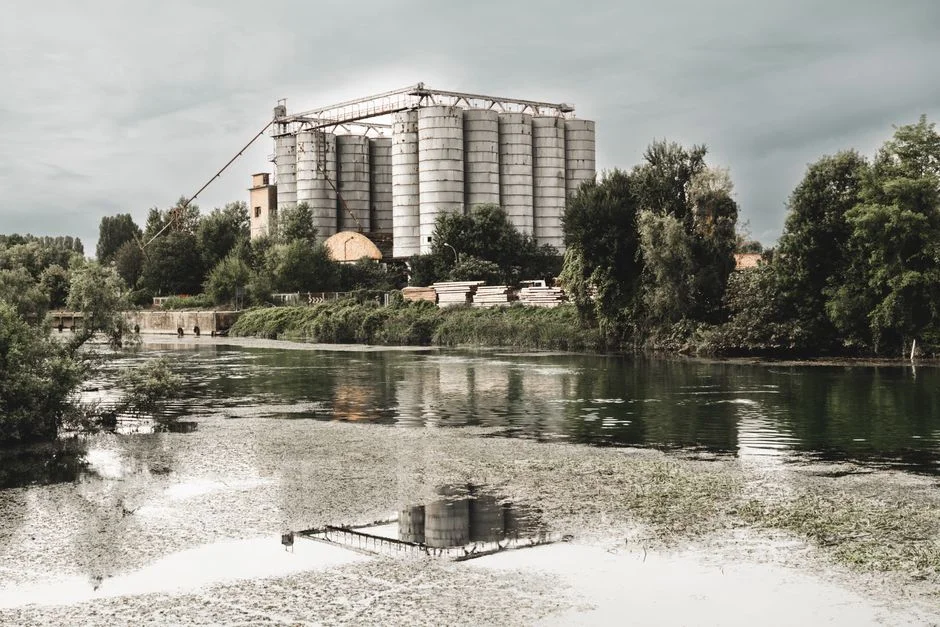
For bulk materials with high abrasion potential—cement clinker, coal, or sand—internal stiffeners act as wear accelerators. Material sliding against the stiffener face creates a localized abrasion rate 3 to 5 times higher than on smooth wall sections. In a 3,000-ton coal silo with internal stiffeners, we observed wall thinning of 2 mm per year at stiffener edges, compared to 0.4 mm on the main wall. This forces premature replacement or costly weld overlay repair every 3-5 years.
Selecting Stiffener Type Based on Material Properties
For free-flowing grains like wheat or corn, internal stiffeners are acceptable if the stiffener height is limited to 60 mm and the silo is equipped with a steep cone (60° or greater). For cement, fly ash, or wood pellets, external stiffeners are the industry best practice. A key design parameter: the stiffener-to-wall thickness ratio should not exceed 8:1 for external rings to prevent local buckling during wind loading. Always consult the Essential Steel Silo Design Factors for Bulk Material Storage guide for detailed load combinations.
Common Misconception: Internal Stiffeners Save Steel
Many engineers assume internal stiffeners use less steel because they are shorter (only the wall projection). In reality, internal stiffeners require thicker wall plates to compensate for the reduced effective section modulus. A 15-meter diameter silo with internal rings at 2-meter spacing may use 18% more total steel than an equivalent external-stiffener design, due to the wall thickness penalty. Always run a full cost optimization—not just material weight.
Key Takeaways
- Core Data Point: External stiffeners reduce wall plate thickness by up to 40% for large cement silos, but increase fabrication complexity by 15-20%.
- Best Practice: Always specify external stiffeners for cohesive or abrasive materials (cement, fly ash, clinker) to ensure reliable discharge and minimize wear.
- Risk Alert: Internal stiffeners in fly ash silos can cause arching failures; a 50 mm projection is enough to obstruct flow in a 10-meter diameter silo.
Fabrication, Erection, and Cost: Real-World Trade-offs in Silo Construction
External stiffeners simplify erection because they can be pre-welded to wall panels in the shop, allowing faster field assembly. For a 4,000-ton cement silo, external stiffener designs typically reduce field welding by 30% compared to internal designs, where stiffeners must be welded inside the confined space after the shell is erected. However, external stiffeners require more careful coating—they are exposed to weather and can trap moisture at the weld toe, leading to corrosion. A two-coat epoxy system with 250 microns DFT is standard for external stiffeners in coastal environments.
Cost modeling from recent projects shows that for silos under 12 meters diameter, internal stiffeners can be 5-8% cheaper to fabricate, but this advantage disappears above 15 meters diameter due to the increased wall thickness required. For a 20-meter diameter clinker silo, the external stiffener solution saved $18,000 in steel costs and $7,000 in erection labor. These numbers align with the findings in our Cement Silo Cost Guide: Pricing Factors and Budgeting Tips, which breaks down the cost drivers by silo size and material type.
Frequently Asked Questions
Q: Can internal stiffeners be used safely for fly ash storage if the silo has aeration pads?
A: Aeration pads improve flow but do not eliminate the arching risk caused by internal stiffeners. Fly ash has a high angle of repose (35-45°) and tends to compact against any projection. In a 15-meter diameter fly ash silo with internal stiffeners, we observed that even with full aeration, the flow channel narrowed to 60% of the silo diameter, causing dead zones that reduced live capacity by 25%. For fly ash, external stiffeners are strongly recommended. See our Case Study: Successful Fly Ash Silo Design for Power Plant Operations for real-world performance data.
Q: How do stiffener spacing requirements differ between internal and external designs for seismic zones?
A: In seismic zones (UBC Zone 4 or equivalent), external stiffeners must be spaced at a maximum of 1.2 meters to resist the combined hoop and bending stresses from earthquake loads. Internal stiffeners can be spaced up to 2.0 meters because they are in compression from the material load, which improves their buckling resistance. However, the internal stiffeners must be designed as ductile elements—brittle failure at the weld toe is a known risk. We recommend using a finite element analysis (FEA) with nonlinear material models for any silo over 18 meters diameter in high-seismic regions.
Looking for Professional Silo Storage Solutions?
We provide customized design, manufacturing, and installation services for steel silo systems worldwide.
Get Your Free Technical Consultation →