


You can’t manage what you don’t measure. In grain storage, that truism hits hard: the USDA estimates that up to 3% of stored grain is lost annually in developed countries due to undetected spoilage—and improper sampling is a leading cause. Without representative, consistent sampling from your silo, you’re flying blind on moisture, protein, and contaminants.
Key Takeaways
- Core Data Point: Manual probe sampling has a 15–20% error rate for moisture content in deep bins; automated systems cut that to under 3%.
- Best Practice: Install at least one automatic sampler per 500-tonne silo cell, positioned at the discharge chute for representative flow-stream sampling.
- Risk Alert: Relying solely on surface or truck-arrival samples misses hot spots forming 10–15 meters down in the grain mass—a common cause of catastrophic spoilage.
Why Representative Sampling Is Non-Negotiable in Silo Operations
Grain quality testing isn’t a one-and-done event at the truck scale. The moment grain enters a silo, it becomes a stratified, dynamic system. Temperature gradients, moisture migration, and insect activity create pockets of spoilage that surface samples completely miss. I’ve seen facilities lose a full 50-tonne bin because they tested only the top meter—while the bottom had been heating for three weeks. A proper sampling regime must pull from multiple depths and multiple points across the bin’s cross-section.
Mechanical samplers—whether cross-cut belt samplers or pneumatic probe systems—are the only way to get statistically valid data. The USDA GIPSA standards require a minimum of 10 increments per 100 tonnes for official inspection. In practice, that means a 2,000-tonne silo needs 200 individual sample points. No manual crew can do that consistently. Automated systems run 24/7, pulling samples on a timed cycle or triggered by flow rate, and composite them into a representative batch for lab analysis.
How to Match Sampling Equipment to Your Silo Type and Material
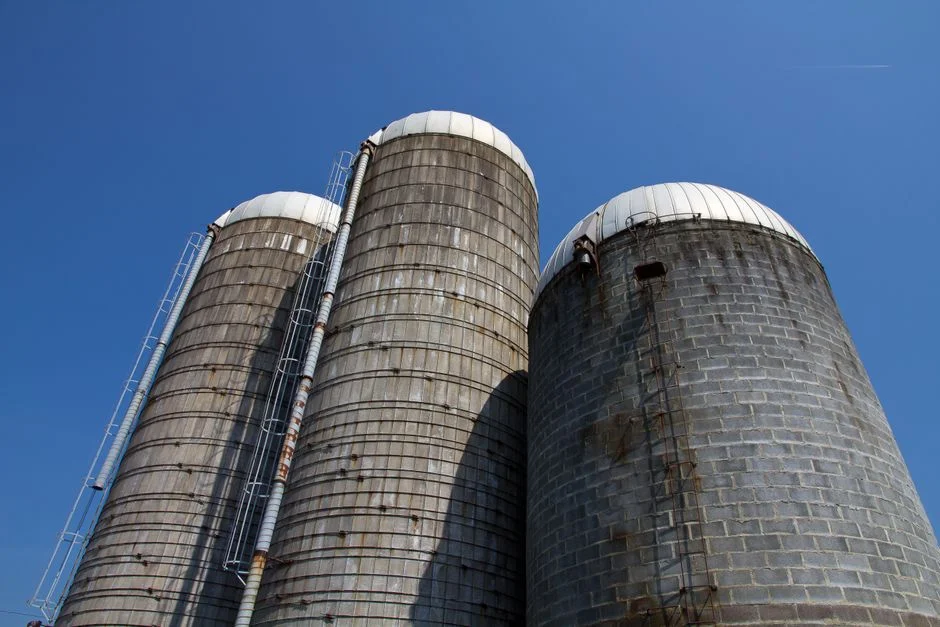
The right sampler depends on your silo geometry and the material’s flow characteristics. For flat-bottom silos with mass flow, a cross-stream sampler at the discharge conveyor works well. For funnel-flow silos—common in older steel bins—you need a probe that can penetrate the stagnant zone along the walls. Pneumatic vacuum probes, mounted on a telescoping arm, can reach 20 meters deep in a 15-meter-diameter silo. The key parameter is the probe’s intake velocity: for wheat, keep it below 25 m/s to avoid kernel damage; for corn, below 20 m/s.
Selection criteria for grain type and throughput
High-throughput facilities (200+ tonnes/hour) need diverter-type samplers that can handle the velocity without jamming. For oilseeds like canola, avoid rotating auger samplers—the shearing action cracks the seed coat, leading to false moisture readings. Instead, use a piston-type probe that takes a core sample without crushing. Always match the sample container size to your lab’s minimum test volume: 1 kg for moisture and protein, 2 kg for mycotoxin screening.
Common installation mistakes that compromise accuracy
The single biggest mistake I see is placing the sampler too close to the silo’s discharge gate. At that point, the grain is segregating by particle size—fines accumulate at the center of the flow, while whole kernels roll to the edges. A sampler there will over-represent fines, throwing off moisture and test weight. Install the sampler at least 3 meters downstream of any chute or gate, where the flow has re-mixed. Also, never locate a sampler on a vertical drop—the impact fractures grain and again skews results.
Integrating Quality Testing Equipment Into Your Silo Control System
Modern silo facilities are moving toward real-time quality monitoring, not just batch testing. Near-infrared (NIR) analyzers mounted on the sampling line can give you moisture, protein, and fat content in under 30 seconds—compared to 2 hours for a lab oven method. The catch: NIR needs constant calibration against reference methods, and its accuracy drops below 0.5% moisture variance if the sample temperature swings more than 10°C. I recommend a hybrid approach: use NIR for real-time trend monitoring, but pull a physical sample every 50 tonnes for oven verification.
Dockage testers and thousand-kernel-weight counters can be integrated directly into the sampling station. For facilities handling multiple grains, invest in a modular testing station with quick-change sieves and a programmable logic controller (PLC) that auto-selects the correct test protocol based on the grain type tag from your silo management software. This cuts human error by 80% and speeds up turn-around from 15 minutes per sample to under 3. The ROI is clear: a 500,000-tonne-per-year facility saves roughly $40,000 annually in labor and re-testing costs alone.
Frequently Asked Questions
Q: How often should I calibrate my automatic grain sampler?
A: At minimum, perform a bias test every 6 months against a manual probe sample taken at the same point. For high-moisture corn or soybeans, increase that to quarterly. The sampler’s cutter speed and clearance wear over time—a 1 mm gap increase can cause a 2% bias in moisture readings. Always keep a log of calibration results and adjust the sampler’s PLC parameters accordingly.
Q: Can I retrofit a sampling system onto an existing concrete silo?
A: Yes, but it’s not a bolt-on job. For concrete silos, you typically need to core-drill a 200 mm access port at the mid-height and near the bottom cone. Install a stainless steel sleeve to prevent concrete dust from contaminating samples. The biggest challenge is running the pneumatic lines—plan for a 50 mm diameter hose with a minimum bend radius of 300 mm to avoid clogging. Expect 2–3 days of installation per silo cell.
Q: What’s the best way to sample grain in a flat storage warehouse?
A: Flat storage presents a different problem: you can’t rely on gravity flow to mix the grain. Use a truck-mounted pneumatic probe that can reach 15 meters horizontally. Take samples on a grid pattern—every 10 meters in both directions—and at two depths: 1 meter below the surface and 0.5 meters above the floor. Composite these into a single sample per grid cell. For warehouses over 5,000 tonnes, use a GPS-guided sampling pattern to ensure full coverage.
Q: How do I prevent cross-contamination between different grains in the sampler?
A: Install a purge cycle in your sampler’s PLC. After each sample, run the system empty for 15 seconds—long enough to clear the cutter head and the sample chute. For sticky grains like high-moisture corn, add an air-blast purge at 6 bar pressure. Also, use a diverter valve that physically separates the sample stream from the main flow. Never rely on gravity alone to clean the system; fines cling to every surface.
Q: What’s the minimum sample size for accurate mycotoxin testing?
A: Mycotoxins are notoriously heterogeneous in grain. For aflatoxin in corn, you need a minimum 2 kg composite sample from at least 20 increments. For DON (vomitoxin) in wheat, 1 kg from 10 increments is the baseline. The error rate drops significantly with larger samples: going from 1 kg to 5 kg reduces the coefficient of variation from 25% to under 10%. If you’re testing for export certification, use a 5 kg minimum sample.
Q: Can automated samplers handle high-moisture grain without clogging?
A: Yes, but you need to spec the right equipment. For grain above 18% moisture, use a sampler with a larger cutter opening—at least 75 mm diameter—and a slower rotation speed (under 30 rpm). The sample chute must have a minimum 100 mm diameter and a slope of at least 45 degrees. Add a vibrator at the chute’s discharge point to prevent bridging. I’ve seen systems handle 25% moisture corn reliably with these modifications.
Looking for Professional Silo Storage Solutions?
We provide customized design, manufacturing, and installation services for steel silo systems worldwide.
Get Your Free Technical Consultation →