


As industrial silo systems become increasingly networked for remote monitoring and automated control, the attack surface for cyber threats expands significantly. A 2023 industry survey by a major engineering consortium found that 43% of bulk material handling facilities experienced at least one control system intrusion attempt in the prior year. Understanding these risks is not optional—it is a fundamental requirement for operational continuity and safety in modern cement, coal, and clinker storage operations.Related: Calculating Cement Silo Load Capacities: Technical Guide
rong>Why Networked Silo Control Systems Are Vulnerable to Cyber Attacks
The transition from standalone PLCs to integrated SCADA networks has brought undeniable efficiency gains—real-time level monitoring, automated aeration control, and remote discharge sequencing. However, this connectivity introduces vectors that traditional pneumatic or mechanical systems never faced. Many silo control networks rely on legacy protocols like Modbus RTU or Profibus, which lack encryption and authentication. An attacker who gains access to the plant LAN can potentially send false level readings, override pressure relief valves, or disrupt the dust explosion prevention systems that protect structural integrity.
We have seen cases where a compromised human-machine interface (HMI) displayed a "safe" fill level while the actual material height exceeded design limits, leading to overpressure and wall deformation. The
root cause was not mechanical failure—it was a manipulated sensor signal. This is why cybersecurity for silo networks must be treated with the same rigor as structural engineering calculations.Securing the Communication Layer Between Sensors and Controllers
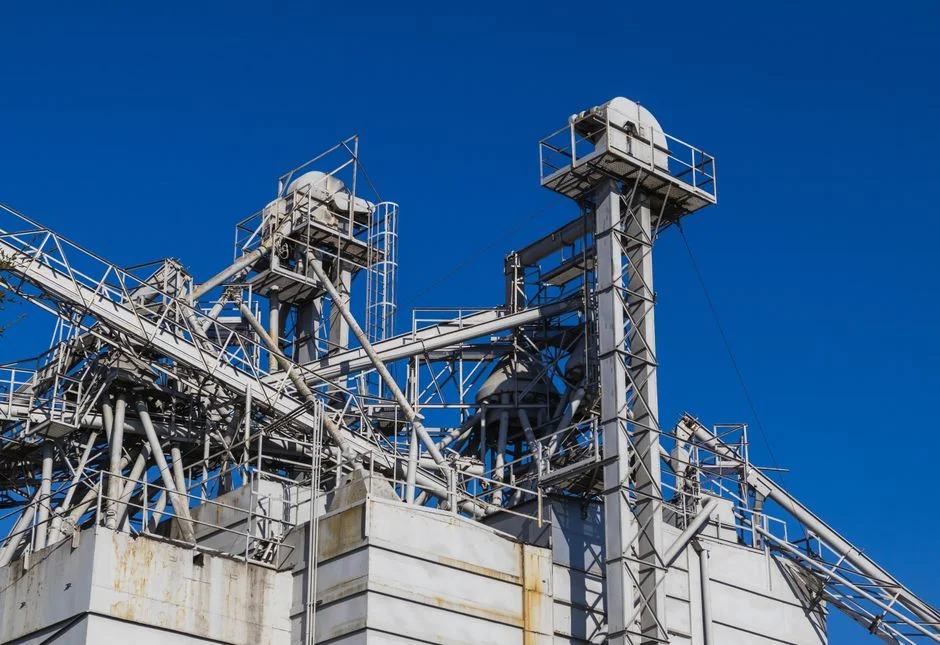
Most silo monitoring systems use a combination of radar level transmitters, temperature cables, and pressure transducers communicating back to a central controller. The weakest link is often the unsecured fieldbus network. Implementing network segmentation—placing the silo control network on a separate VLAN with strict firewall rules—is a non-negotiable first step. We recommend using industrial-grade switches with 802.1X port authentication to prevent unauthorized device connections.
Encryption and Authentication for Remote Access
When a professional manufacturer provides remote diagnostic capabilities, those connections must use VPN tunnels with mutual TLS authentication. Never rely on port forwarding or default credentials. For facilities handling cement or fly ash, where silo selection and safety protocols already demand rigorous standards, extending that discipline to network security is a natural progression.
Common Misconception: "Air-Gapped Systems Are Safe"
Many operators believe that because their silo control system is not connected to the internet, it is immune to cyber threats. This is dangerously false. Stuxnet proved that USB drives and laptop connections can breach air-gapped networks. Any maintenance laptop that connects to both the plant IT network and the silo control system becomes a potential bridge. Enforce strict portable media policies and use dedicated, air-gapped programming terminals.
Key Takeaways
- Core Data Point: 43% of bulk handling facilities reported a control system intrusion attempt in 2023, according to a cross-industry engineering survey.
- Best Practice: Implement network segmentation (separate VLAN) and 802.1X authentication for all silo control field devices.
- Risk Alert: Air-gapped systems are still vulnerable via maintenance laptops and USB drives—enforce strict device policies.
Integrating Cybersecurity into Silo System Procurement and Retrofit
When specifying a new silo system or upgrading an existing one, cybersecurity requirements should be written into the technical specification—not added as an afterthought. Demand that the control system vendor provide a secure development lifecycle (SDL) report, including firmware signing and vulnerability disclosure procedures. For retrofits, conduct a gap analysis comparing current network architecture against the ISA/IEC 62443 standard. This is especially critical when integrating spiral steel silos with advanced automation, as their continuous welding process often attracts higher-capacity control systems.
We have observed that facilities using modular steel silo designs often have more distributed control points, which increases the number of network nodes requiring protection. A comprehensive approach includes regular penetration testing of the control network, strict change management for PLC firmware updates, and role-based access control (RBAC) for all HMI operators. Remember, a cyber incident in a silo system does not just stop production—it can trigger a dust explosion or structural collapse.
Frequently Asked Questions
Q: How can we verify that our existing silo control system has not already been compromised?
A: Start by performing a full network traffic audit using a passive monitoring tool like Wireshark or an industrial IDS. Look for unexpected outbound connections, repeated login failures on PLCs, or unusual Modbus function codes (e.g., write commands during non-operational hours). Compare current PLC firmware hashes against manufacturer-supplied checksums. If you find discrepancies, isolate the affected segment immediately and engage an ICS-CERT certified incident response team.
Q: What are the specific cybersecurity risks for silos handling combustible dust like coal or grain?
A: The primary risk is manipulation of safety-critical parameters. An attacker could alter the setpoint for dust collector pressure differentials, disable spark detection systems, or override interlock sequences that prevent hot material from entering storage. In a cement silo, for example, a compromised CO monitoring system could fail to detect smoldering material. This is why safety instrumented systems (SIS) must remain physically isolated from the basic process control system (BPCS), even on a segmented network. The SIS should use hardwired logic, not programmable controllers connected to the same bus.
Looking for Professional Silo Storage Solutions?
We provide customized design, manufacturing, and installation services for steel silo systems worldwide, with integrated cybersecurity-hardened control options.
Get Your Free Technical Consultation →