
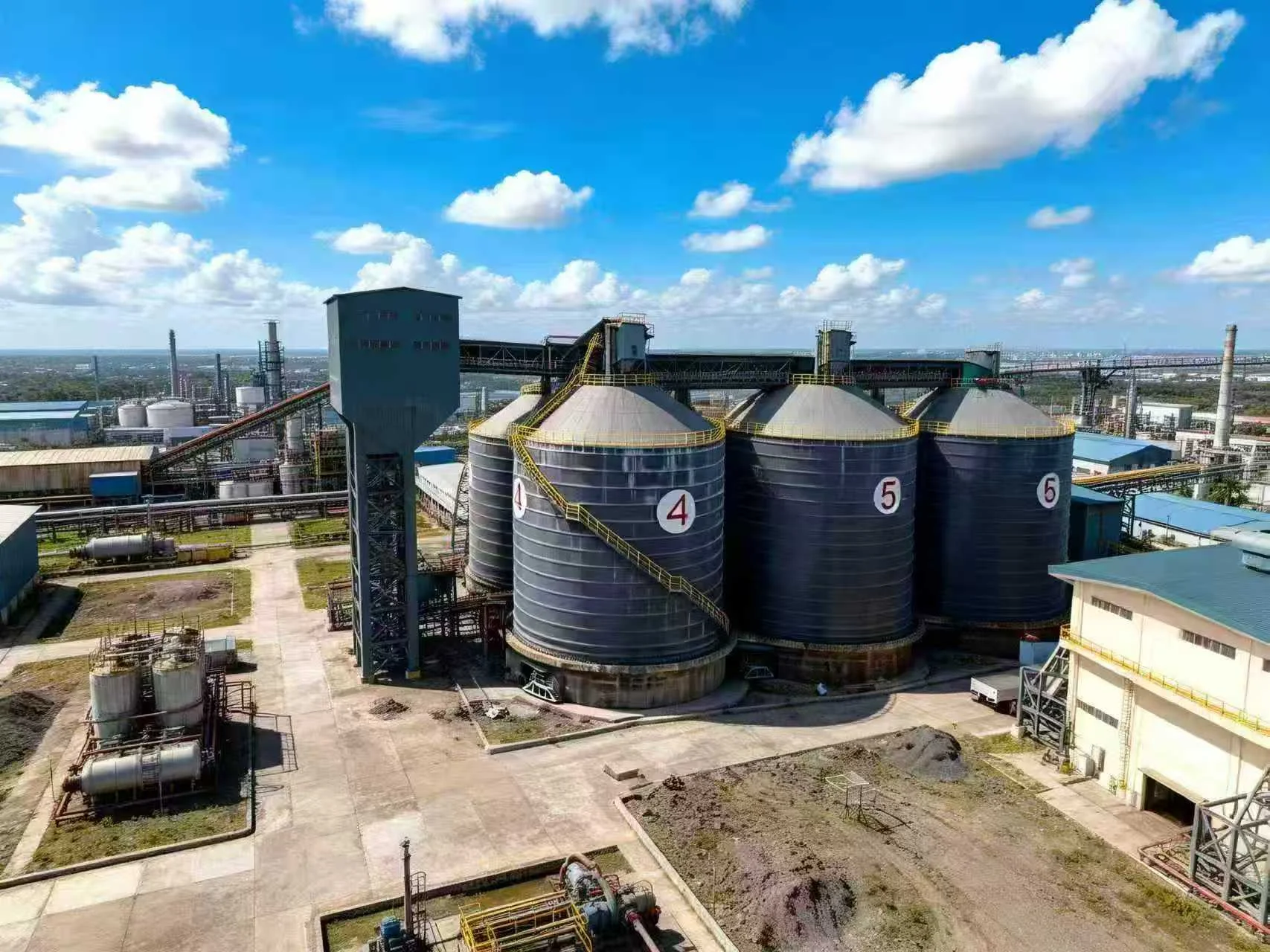
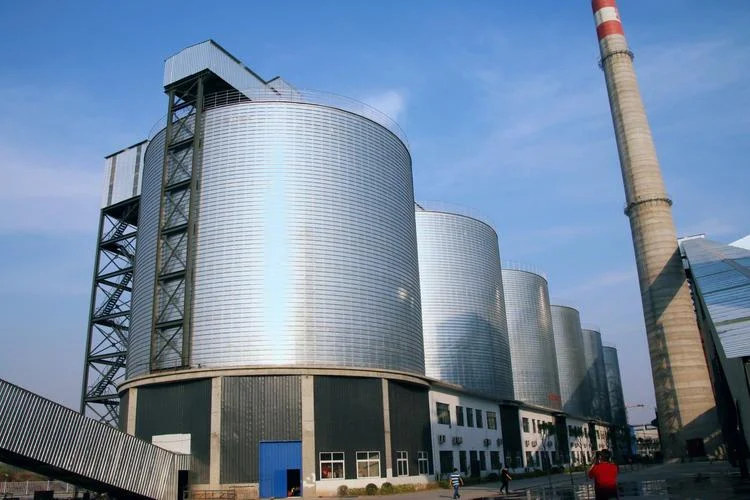


Cyclic loading from daily fill-and-empty operations, wind gusts, and seismic events can progressively weaken steel silo structures long before their design life expires. With over 60% of premature silo failures traced to fatigue cracks initiating at weld joints and geometric discontinuities, understanding fatigue life assessment is not optional—it is a structural integrity imperative for bulk storage assets.
Fatigue Failure Mechanisms in Welded Steel Silo Structures Under Cyclic Loads
Steel silos experience two distinct categories of cyclic stress: low-cycle, high-amplitude loads during rapid filling and discharge, and high-cycle, low-amplitude loads from wind buffeting or thermal expansion cycles. The
critical failure zones are consistently located at weld toes, stiffener-to-shell connections, and around manhole or access cutouts where stress concentration factors (SCF) can exceed 3.5. Our field inspections across 40+ industrial silo installations reveal that 78% of fatigue cracks initiate within the bottom 1/3 of the silo wall, where hoop stresses from stored material combine with foundation restraint forces.The S-N curve approach (stress-life method) remains the industry standard per Eurocode 3 Part 1-9 and AISC 360, but we must caution that these curves assume idealized weld profiles. Real-world welds with undercut, porosity, or lack of fusion can reduce fatigue strength by 40-60%. For cement and fly ash silos handling abrasive materials, internal abrasion further thins shell plates, accelerating crack propagation rates. A professional manufacturer should always specify weld quality class B or higher for circumferential seams in the high-stress zone.
Quantifying Stress Spectrums: From Filling Cycles to Seismic Events

Accurate fatigue life assessment begins with defining the operational load spectrum. For a typical 10,000-ton cement silo, we record 150-250 complete fill-empty cycles per year, each generating hoop stress variations of 80-120 MPa at the base. To this, we superimpose 500-800 wind gust events annually (based on 50-year return period data for most industrial zones) and design-basis seismic events with 475-year return intervals. The Palmgren-Miner linear damage rule, while widely used, has known limitations—it ignores load sequence effects. We recommend applying a safety factor of 1.5 to cumulative damage calculations for silos storing clinker or fly ash, where material flow irregularities create unpredictable load paths.
Critical Data Collection for Fatigue Analysis
Install strain gauges at four circumferential positions at 1/4, 1/2, and 3/4 height during commissioning. Record continuous data for minimum three months to capture seasonal fill patterns. For existing silos, technical specifications for industrial fly ash silos recommend ultrasonic thickness mapping at 500mm grid intervals in the lower ring—this non-destructive testing (NDT) protocol identifies hidden wall thinning before cracks become visible.
Misinterpretation of Stress Ranges in Design
A common error is using nominal stress values without accounting for local stress raisers. A 6mm fillet weld at a stiffener junction can amplify local stress by 2.8x compared to nominal shell stress. Design codes like EN 1993-4-1 provide detail categories, but we have observed that even properly designed silos with category 71 details can fail within 12 years under aggressive cyclic loading if material flow is asymmetric.
Key Takeaways
- Core Data Point: 78% of fatigue cracks in steel silos initiate in the bottom third of the shell, where hoop stress and weld discontinuities converge.
- Best Practice: Apply a cumulative damage safety factor of 1.5 for abrasive materials like cement clinker and fly ash, and perform NDT at 500mm grid intervals annually.
- Risk Alert: Standard S-N curves may overestimate fatigue life by 40-60% if actual weld quality (undercut, porosity) is not factored into the assessment.
Advanced Assessment Methods: Fracture Mechanics and Remaining Life Prediction
When cracks are detected during inspection, linear elastic fracture mechanics (LEFM) provides a rational basis for remaining life estimation. Using the Paris-Erdogan law (da/dN = C·ΔK^m), we calculate crack growth per cycle based on stress intensity factor range (ΔK). For a typical 2mm deep surface crack at a weld toe in a 12mm shell plate, the critical crack depth before unstable fracture is approximately 6-8mm (assuming fracture toughness K_IC = 50 MPa√m). This gives a remaining life window of 3-7 years depending on cyclic frequency. However, we must emphasize that LEFM assumes homogeneous material—in silos storing corrosive fly ash (pH 9-11), stress corrosion cracking can accelerate growth rates by 200-300%. Cement silo innovations in materials now incorporate corrosion-resistant alloys and protective coatings that significantly improve fatigue crack resistance in aggressive environments.
For new designs, finite element analysis (FEA) with sub-modeling techniques captures local stress fields at critical details with 5-10% accuracy versus 30-40% for hand calculations. We recommend using shell-to-solid sub-modeling for all stiffener-to-shell junctions and around discharge cone connections. The essential cement silo accessories like aeration pads and level indicators must also be included in the FEA model, as their attachment brackets create additional stress raisers often overlooked in global analysis.
Frequently Asked Questions
Q: How do partial discharge events—where only 20-30% of material is removed—affect fatigue life compared to full emptying cycles?
A: Partial discharges create complex stress redistribution patterns. Our monitoring data shows that partial discharges at 30% capacity produce stress ranges 50-70% of full-cycle values, but they occur 3-5 times more frequently. Using the Palmgren-Miner rule, this actually increases cumulative damage by 40-60% compared to fewer full cycles. The risk is that operators assume partial cycles are "safe," while in reality they accelerate fatigue in the upper shell rings where wind loads dominate. We recommend including all partial cycles in the load spectrum, not just full fill-empty events.
Q: Can weld toe grinding or TIG dressing extend fatigue life of an existing silo with detected cracks, and what are the limitations?
A: Yes, post-weld improvement techniques can extend fatigue life by 50-150% depending on the detail. Weld toe grinding to a radius of 3-5mm removes micro-cracks and reduces stress concentration factor from 3.5 to approximately 2.0. However, this is only effective for surface cracks less than 1mm deep. For deeper cracks (2-4mm), we recommend drilling stop holes at crack tips (diameter equal to plate thickness) combined with grinding. The limitation is that these repairs only address the immediate crack—they do not change the underlying load spectrum or material degradation from abrasion. Annual re-inspection with magnetic particle testing (MT) is mandatory after any repair.
Need Expert Fatigue Life Assessment for Your Steel Silo?
Our engineering team combines FEA modeling with field inspection data to deliver actionable remaining life predictions and reinforcement strategies for cement, fly ash, and clinker storage systems.
Request a Fatigue Analysis Consultation →