
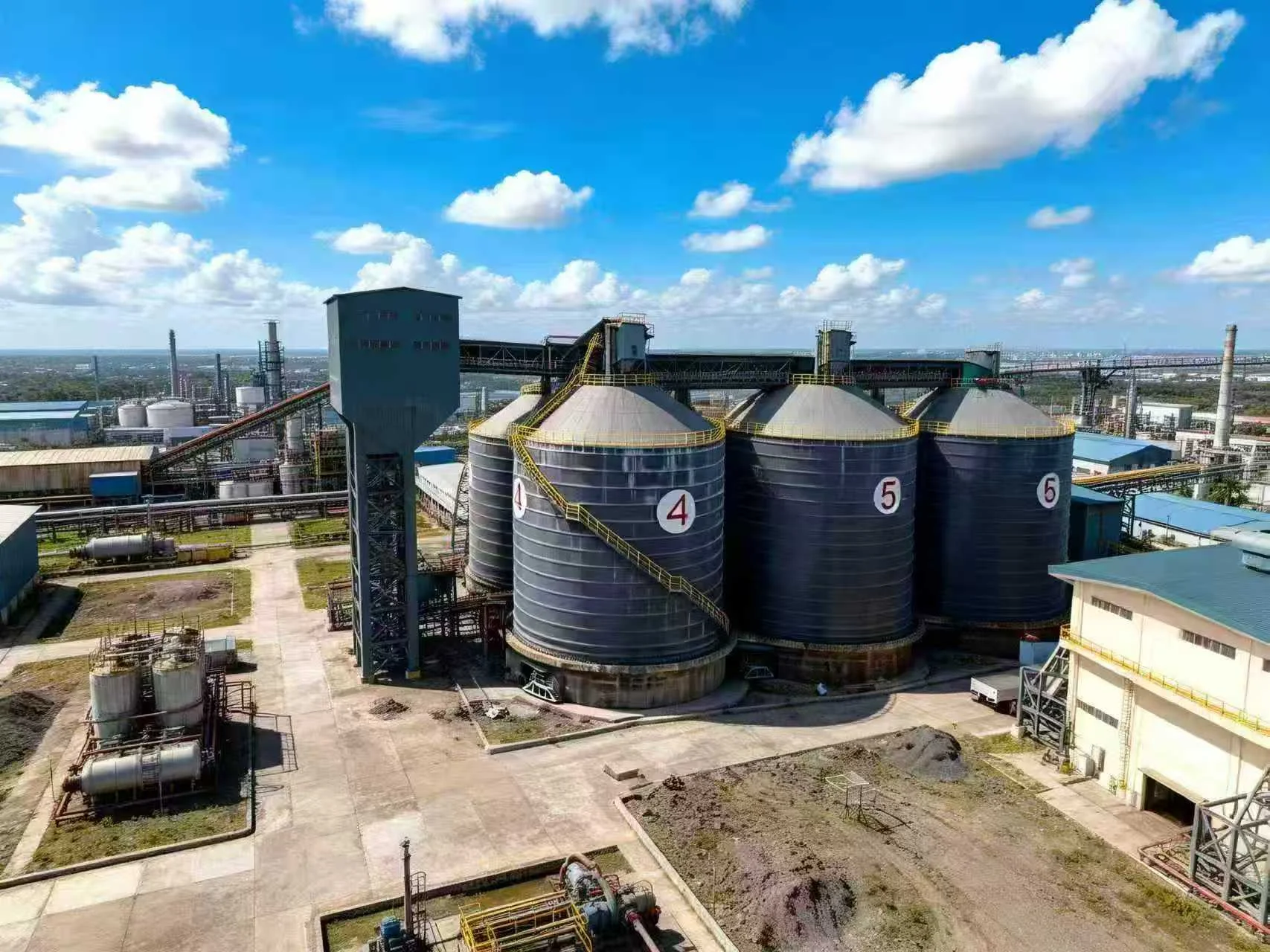



Specifying the wrong silo access door can compromise structural integrity and create a serious safety hazard under pressure differentials. With over 70% of industrial silo failures linked to poorly designed or improperly sealed access points, understanding the distinct design standards for pressure and non-pressure applications is critical for plant engineers and project managers.
Pressure vs. Non-Pressure Silo Access Doors: Defining the Engineering Boundary
The fundamental distinction between a pressure-rated and a non-pressure access door lies in its ability to withstand internal forces without deformation or leakage. For non-pressure applications—typically found in flat-bottom grain silos or low-velocity material storage—a simple, bolted flange door with a gasket seal is often sufficient. These doors are designed primarily for personnel entry during maintenance and cleaning, and they must conform to general industrial safety standards like OSHA 1910.23 for safe egress.
In contrast, pressure applications, such as those for cement, fly ash, or clinker storage where pneumatic conveying or aeration systems create internal pressures up to 0.5 psi (3.5 kPa) or more, require doors that are ASME-certified or designed to a recognized pressure vessel code. A professional manufacturer will typically specify a domed or reinforced door design to distribute stress evenly, using a minimum of 3/8-inch (10 mm) thick steel plate for the door blank, compared to the 1/4-inch (6 mm) common in non-pressure units. The hinge and latching mechanisms must also be rated for cyclic loading, not just static pressure.
Critical Design Parameters for Pressure-Rated Silo Access Doors

When specifying a door for a pressure system, the design must account for both positive and negative (vacuum) pressure scenarios. A common oversight is designing only for positive pressure, which can lead to catastrophic inward buckling during pneumatic unloading. The door's seal—typically a silicone or EPDM gasket—must be compressed by a cam-lock or bolted flange system that provides a uniform clamping force exceeding the pressure thrust. For a 24-inch diameter door at 0.5 psi, the total thrust is approximately 226 lbs (1.0 kN), requiring a robust, multi-point latching system.
Gasket Selection and Material Compatibility
For fly ash or cement applications, the gasket must resist abrasion and chemical attack from fine dust. EPDM is the standard for general use, but for high-temperature clinker storage (above 180°F/82°C), a silicone-based gasket is mandatory. We have observed that standard neoprene gaskets degrade within 18 months in cement silo environments, leading to dust leakage and pressure loss.
Common Missteps in Door Manxing Weldments
One of the most frequent errors is welding the door Manxing directly to the silo shell without accounting for thermal expansion and contraction. This can cause the Manxing to warp, breaking the seal. Best practice is to use a full-penetration weld on a pre-formed, stress-relieved Manxing ring, with a minimum throat thickness of 5/16 inch (8 mm).
Key Takeaways
- Core Data Point: Pressure-rated doors require a minimum plate thickness of 10 mm (3/8 in) for diameters over 24 inches, compared to 6 mm (1/4 in) for non-pressure units, as per industry best practices.
- Best Practice: Always specify a full-penetration weld for the door Manxing on pressure vessels and request a hydrostatic or pneumatic test certificate from the fabricator.
- Risk Alert: Using a standard non-pressure door on a pneumatic conveying silo can create a projectile hazard if the door blows open under pressure.
Non-Pressure Door Standards: Safety, Egress, and Practicality
For non-pressure applications, the primary concerns shift from pressure containment to personnel safety and operational convenience. The door must open outward to allow easy egress in an emergency, and the opening should have a clear diameter of at least 24 inches (610 mm) to accommodate a worker in full safety harness. The National Fire Protection Association (NFPA) 61 standard for agricultural and food processing facilities further requires that access doors be interlocked with conveying equipment to prevent entry during operation. For a deep dive into how these standards integrate into a full system, our Process Design Requirements for Industrial Silos article covers the complete workflow.
Material selection for non-pressure doors is less stringent, but corrosion resistance remains critical. Galvanized steel or aluminum doors are common for grain storage, while painted carbon steel suffices for dry, indoor applications. The hinge design should be a continuous piano hinge or heavy-duty strap hinge rated for at least 300 lbs (136 kg) of static load to prevent sagging over time. A common mistake is using light-duty hinges that fail after repeated cycles, causing the door to misalign and jam.
Inspection and Maintenance Protocols for Silo Access Doors
Regardless of the application, a rigorous inspection schedule is non-negotiable. For pressure-rated doors, we recommend a quarterly visual inspection for gasket wear, hinge pin deformation, and bolt torque. Annually, a pressure decay test should be conducted to verify the seal integrity. For non-pressure doors, the focus should be on corrosion at the weld joints and hinge pivot points. A simple test—closing the door on a piece of paper and trying to pull it out—can quickly reveal gasket compression loss. For more specific safety protocols related to dust environments, refer to our guide on Cement Silo Safety: Dust Explosion Prevention and Structural Integrity.
Frequently Asked Questions
Q: Can a non-pressure silo access door be retrofitted to meet pressure vessel standards?
A: Generally, no. Retrofitting is rarely cost-effective or safe. The door Manxing, hinges, and locking mechanism are typically under-designed for the cyclic loads of a pressure system. The shell plate around the opening also needs reinforcement, often requiring a full-penetration weld and a thicker doubler ring. It is almost always safer and more economical to replace the entire door assembly with a certified pressure-rated unit. A professional manufacturer can provide a custom retrofit ring that bolts to the existing shell, but this requires a detailed FEA analysis.
Q: What is the specific test pressure for a fly ash silo access door, and how does it relate to the design pressure?
A: For a fly ash silo, the pneumatic conveying system often generates peak pressures during start-up or plug clearing. The access door should be hydrostatically tested to 1.5 times the maximum design pressure (MDP) as a minimum, per ASME Section VIII, Division 1 guidelines. For example, if your system operates at 0.5 psi, the door must be tested to 0.75 psi without leakage or permanent deformation. This margin accounts for fatigue and material degradation over a 20-year design life. A case study on a 500-Ton Fly Ash Silo for a Power Plant details how these test pressures were validated in a real-world project.
Looking for Professional Silo Storage Solutions?
We provide customized design, manufacturing, and installation services for steel silo systems worldwide.
Get Your Free Technical Consultation →