
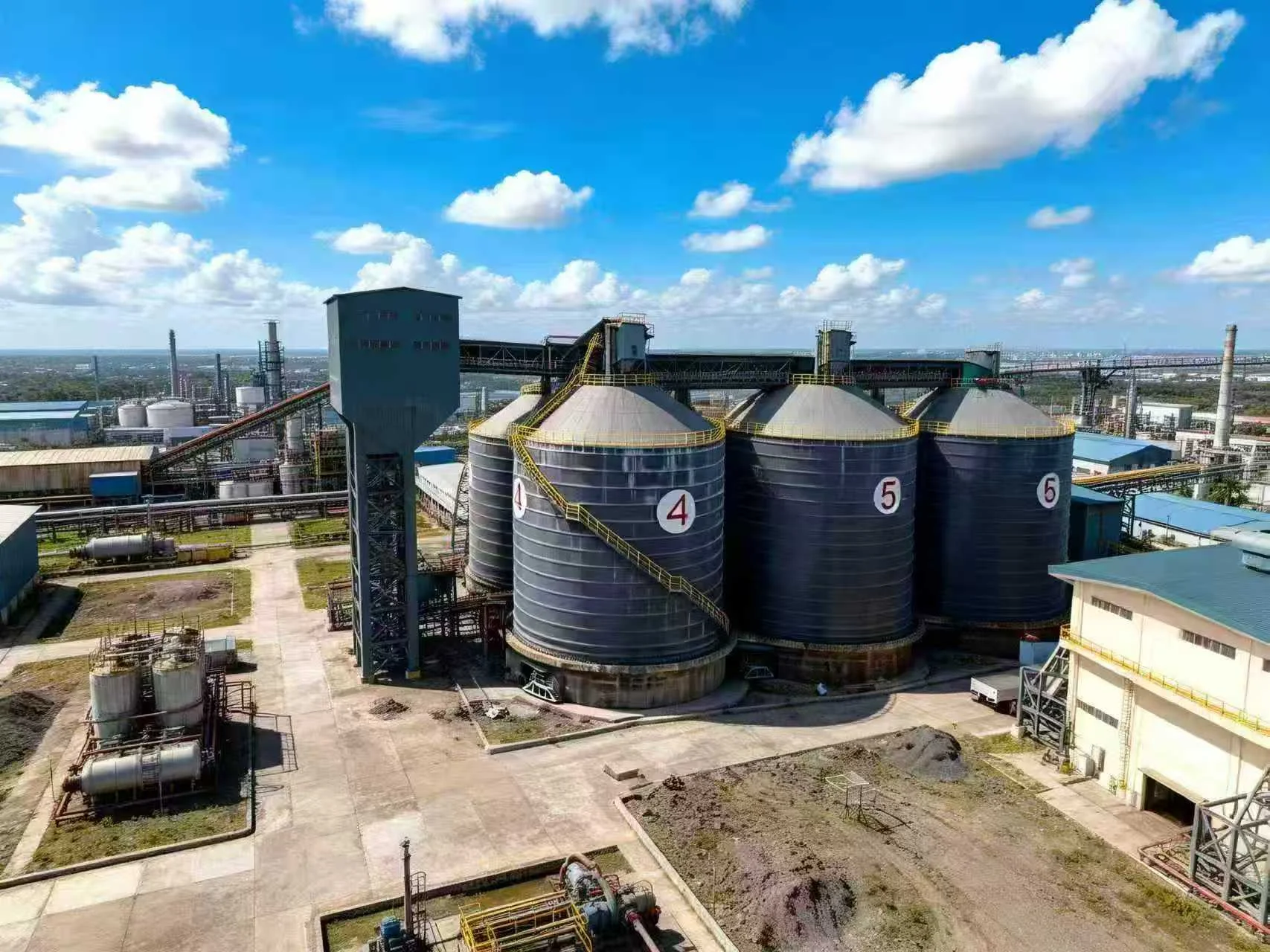
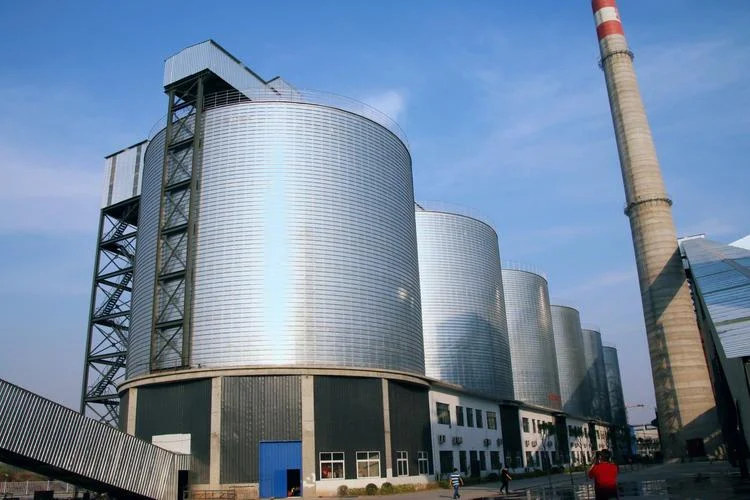


Fertilizer storage presents a unique set of challenges that go far beyond standard grain or cement handling. The hygroscopic nature, caking tendencies, and corrosive potential of many fertilizer materials demand specialized silo design and material handling strategies. With over 40% of bulk fertilizer failures in storage traced to inadequate moisture control and improper discharge system selection, understanding these material properties is not optional—it is the foundation of a reliable storage investment.
Understanding Fertilizer Material Properties: The Key to Safe Storage
Every fertilizer type—whether urea, ammonium nitrate, NPK blends, or potash—exhibits distinct physical and chemical behaviors that directly influence silo design. The critical parameters include angle of repose (typically 25° to 40°), bulk density (ranging from 0.6 to 1.2 t/m³), and most importantly, the hygroscopic point. For example, urea begins absorbing moisture from the air at relative humidity above 72%, leading to caking and degradation. An experienced engineering team will always conduct a full material characterization before specifying wall thickness, hopper angles, and discharge equipment.
Compounding the issue is the tendency of fertilizers to undergo chemical changes during storage. Ammonium nitrate, for instance, can undergo phase transitions with temperature fluctuations, causing volume expansion that stresses silo walls. This is why Essential Steel Silo Design Factors for Bulk Material Storage must include thermal expansion allowances and corrosion-resistant coatings. Ignoring these properties can lead to blocked discharge, structural fatigue, or even safety hazards in extreme cases.
Moisture Control and Corrosion Mitigation in Silo Systems
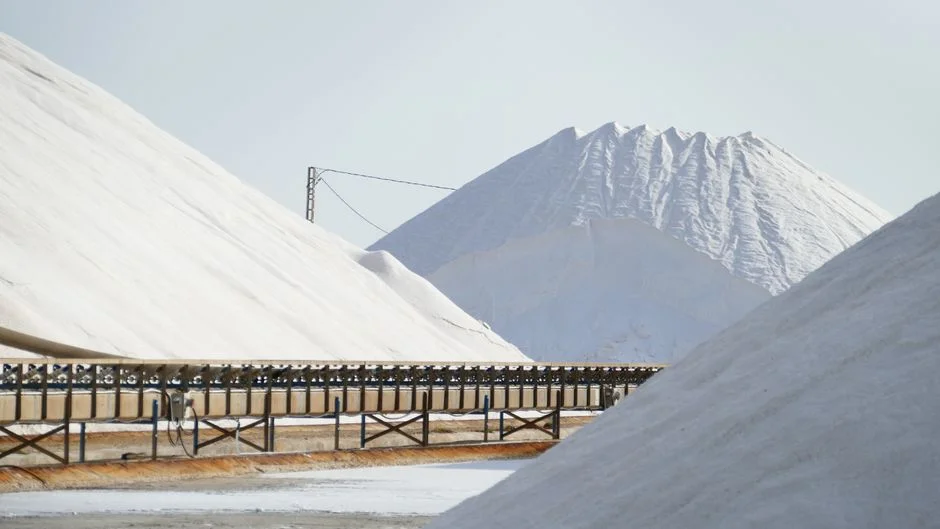
Moisture is the single greatest enemy of fertilizer stored in bulk. Even small amounts of water ingress can trigger a chain reaction: surface dissolution, recrystallization, and the formation of hard crusts that bridge across hopper outlets. To combat this, we recommend a dual approach: passive moisture barriers and active aeration systems. Silo walls should be constructed with welded steel seams and sealed with epoxy-based liners that resist both moisture and chemical attack. Additionally, a low-volume, low-pressure aeration system (0.1 to 0.3 m³/min per ton) can maintain uniform temperature and humidity levels throughout the stored mass.
Selecting Corrosion-Resistant Materials
Stainless steel (304L or 316L) is the gold standard for fertilizer silos handling highly corrosive products like ammonium sulfate or superphosphate. However, for less aggressive materials like granular urea, carbon steel with a 200-micron epoxy coating can provide 15+ years of service life when properly maintained. The key is to match the coating system to the specific fertilizer's pH and chloride content—a detail often overlooked in budget-focused projects.
Avoiding Common Design Pitfalls in Discharge Systems
A frequent mistake is assuming a standard 60° hopper angle will work for all fertilizers. In practice, cohesive materials like DAP (diammonium phosphate) require hopper angles of 65° to 70° combined with a mass-flow discharge pattern to prevent ratholing. We have seen installations where a flat-bottom silo with a screw conveyor was specified for potash, only to have the screw shear and stall within weeks due to the material's abrasive nature. Always verify flow properties through shear cell testing before finalizing hopper geometry.
Key Takeaways
- Core Data Point: Industry data shows that 35% of fertilizer silo flow problems originate from ignoring the material's cohesive strength during design.
- Best Practice: Always request a third-party flow property test (Jenike or equivalent) for any fertilizer material before finalizing silo geometry.
- Risk Alert: Never use galvanized steel for fertilizer silos—the zinc coating can react with ammonia-based fertilizers, creating explosive hydrogen gas.
Optimizing Filling and Discharge for Fertilizer Handling
The logistics of filling and discharging fertilizer silos require careful integration with existing plant operations. For filling, we advocate for a dedicated loading spout with telescopic chutes that minimize dust generation and material degradation from free-fall. The drop height should not exceed 3 meters for friable fertilizers like ammonium nitrate prills. On the discharge side, a combination of a mass-flow hopper and a variable-speed rotary valve provides the most reliable control. This approach reduces segregation of blended products and allows for precise batching in downstream blending or bagging systems.
For facilities handling multiple fertilizer types, a flexible design is essential. Consider a silo system with interchangeable discharge cones or a modular Steel Silos: Optimizing Bulk Material Logistics Operations layout that allows for quick changeovers. In one project we consulted on, switching from a 60° to a 70° hopper on a single silo increased throughput by 18% and eliminated weekly maintenance calls for flow blockages. Such adjustments, while seemingly minor, have a direct impact on operational uptime and total cost of ownership.
Frequently Asked Questions
Q: What is the maximum recommended storage temperature for urea in a steel silo to prevent caking?
A: Urea should ideally be stored below 30°C (86°F). Above this threshold, the material's hygroscopicity increases sharply, and the risk of biuret formation—a compound that damages crops—rises. We recommend integrating temperature monitoring probes at multiple silo heights and using a low-flow aeration system to cool the product if ambient temperatures exceed 25°C for extended periods.
Q: How do you design a silo for NPK blends that segregate during handling?
A: Segregation in blended fertilizers is primarily driven by particle size and density differences. The most effective solution is to use a mass-flow hopper design with a central discharge point, which ensures first-in, first-out (FIFO) flow and minimizes particle separation. Additionally, filling should be done via a rotating distributor that layers the blend evenly across the silo cross-section, rather than allowing a conical pile to form. For existing silos, retrofitting with a cone-in-cone insert can reduce segregation by up to 70%.
Looking for Professional Silo Storage Solutions?
We provide customized design, manufacturing, and installation services for steel silo systems worldwide.
Get Your Free Technical Consultation →