
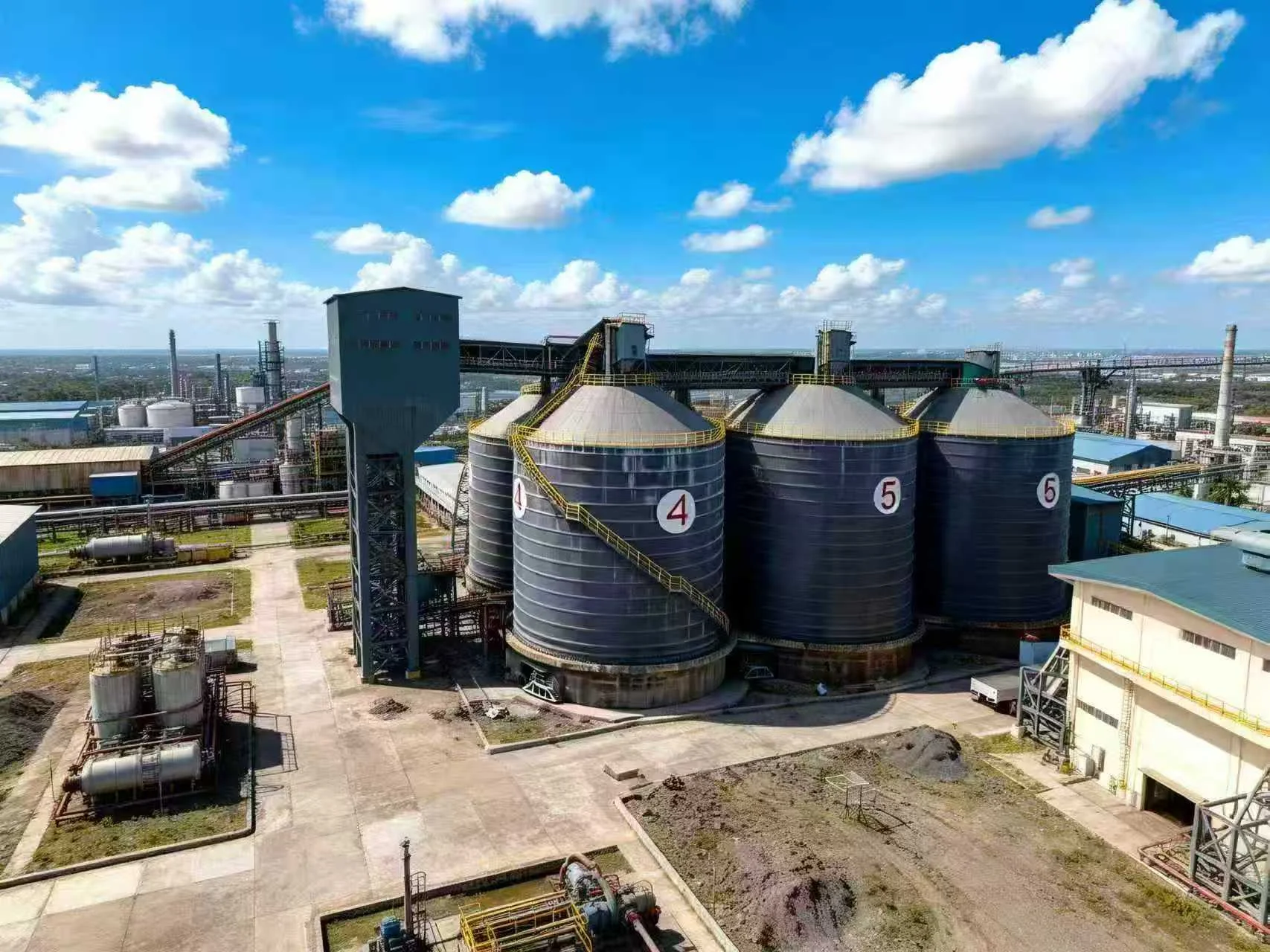
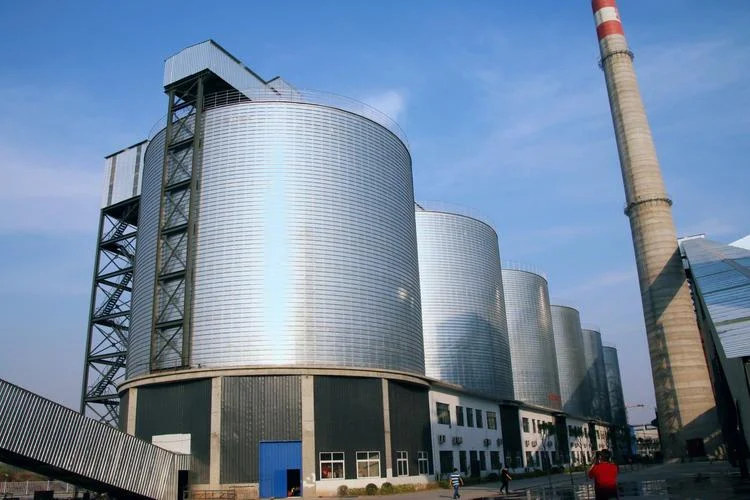


A silo foundation failure can halt an entire project before a single ton of material is stored. Yet, field data from over 200 bulk storage installations indicates that nearly 15% of structural issues originate from foundation design or execution errors rather than the silo shell itself. This guide walks through the critical engineering steps to ensure your foundation supports both the static load of stored material and the dynamic forces of wind, seismic activity, and discharge.
Geotechnical Investigation: The Non-Negotiable First Step for Silo Foundations
Before any concrete is poured, a thorough geotechnical investigation must establish the bearing capacity, soil stratification, and groundwater conditions at the site. For a typical 500-ton fly ash silo, the foundation must distribute a combined dead load and live load exceeding 700 tons. We have seen projects where a standard soil bearing capacity of 150 kPa was assumed, only to find after drilling that the actual value was 90 kPa due to undocumented fill layers. This mismatch forces costly redesigns or, worse, differential settlement after commissioning.
The investigation should include at least two boreholes to a depth of 1.5 times the silo diameter or until competent bearing strata is reached. Standard penetration tests (SPT) and undisturbed soil sampling are mandatory. For sites with high water tables, we recommend additional piezometer readings to evaluate buoyancy effects—an often overlooked factor that can uplift a lightly loaded empty silo during a flood event.
Ring Foundation vs. Mat Slab: Selecting the Right Structural System

The choice between a ring foundation and a full mat slab depends on soil conditions, silo aspect ratio, and load distribution. A ring foundation—essentially a reinforced concrete ring beam under the silo wall—is cost-effective for small to medium silos (under 1,000 tons capacity) on good soil. It concentrates the load directly under the wall, where the majority of vertical force is transmitted. For a 12-meter diameter cement silo, a ring foundation typically requires 30-40% less concrete than a mat slab.
When a Mat Slab Becomes Mandatory
A full mat slab is necessary when soil bearing capacity is below 100 kPa, or when the silo has a high height-to-diameter ratio exceeding 2.5. This design distributes the load over the entire footprint, reducing peak bearing pressure. For fly ash silos in power plants, where multiple silos are clustered, a common mat slab also mitigates differential settlement between adjacent structures. An experienced engineering team will always run a finite element analysis (FEA) to verify slab thickness and reinforcement layout before issuing shop drawings.
Common Pitfall: Ignoring Eccentric Loading from Discharge
During discharge, material flow can create asymmetric pressure on the silo wall, transferring eccentric loads to the foundation. Many standard designs assume perfectly concentric loading, which is rarely the case in practice. We recommend incorporating a 10% eccentricity factor in the foundation design to account for funnel flow patterns, especially for coal and clinker storage where bridging and ratholing are common.
Key Takeaways
- Core Data Point: Approximately 15% of silo structural failures originate from foundation issues, not the silo shell itself (based on industry field reports from 200+ installations).
- Best Practice: Always conduct a geotechnical investigation with at least two boreholes and SPT testing before finalizing foundation design.
- Risk Alert: Eccentric loading during discharge can cause differential settlement if not accounted for—add a 10% eccentricity factor to your load calculations.
Concrete Placement, Curing, and Anchor Bolt Installation Sequence
Foundation construction is not just about rebar and concrete volume—it is about precision. Anchor bolt placement for the silo base ring must be held to a tolerance of ±3 mm in both position and elevation. We have witnessed entire bolt circles being off by 15 mm due to poor formwork alignment, requiring weeks of field modification. The solution is to use a rigid steel template that positions all bolts simultaneously before the concrete pour, then re-check alignment after vibration.
Concrete should be specified with a minimum compressive strength of 25 MPa at 28 days, but for silos handling abrasive materials like clinker or coal, we often specify 30 MPa with a low water-cement ratio (0.45 max) to reduce permeability. Curing must be continuous for at least 7 days using wet burlap or curing compound—rapid drying leads to surface cracking that can propagate under cyclic loading from wind and filling operations. For a detailed look at how foundation integrity ties into overall structural safety, explore our guide on Cement Silo Safety: Dust Explosion Prevention and Structural Integrity.
Long-Term Settlement Monitoring and Maintenance Protocols
Even with a well-designed foundation, settlement monitoring during the first year of operation is essential. Install at least four survey benchmarks on the foundation ring, and take readings monthly during the first six months, then quarterly thereafter. Industry data shows that 80% of total settlement occurs within the first 12 months for properly compacted granular soils. If differential settlement exceeds 1:500 (e.g., 20 mm over a 10-meter span), immediate structural assessment is required.
For existing facilities, periodic inspection of the foundation-to-silo interface is critical. Cracks at the base ring, water staining, or misalignment of access ladders are early indicators of movement. If you are managing an older concrete silo, our guide on Concrete Silo Maintenance for Mining Operations provides actionable inspection protocols that apply to steel silo foundations as well.
Frequently Asked Questions
Q: Can a ring foundation be retrofitted with piles if soil conditions are worse than expected after construction begins?
A: Yes, but it is a high-risk operation. If excavation reveals poor soil at the design depth, we typically stop the pour and install driven or bored piles around the ring beam perimeter. The pile cap must then be integrated with the existing ring via a reinforced concrete overlay. This adds 3-4 weeks to the schedule and increases foundation cost by 30-50%. Pre-construction geotechnical investigation is far cheaper than this retrofit.
Q: How do you design a foundation for a silo cluster where individual silos have different filling schedules?
A: This is a common scenario in power plant fly ash storage. The key is to design a common mat slab with a thickness that can handle the worst-case load combination—one silo full, adjacent silos empty. We use a load factor of 1.6 for the full silo and 0.9 for empty ones in the structural model. The slab reinforcement must be symmetrical top and bottom to resist reversal of bending moments. Our Case Study: Designing a 500-Ton Fly Ash Silo for a Power Plant details this exact scenario with real load calculations.
Looking for Professional Silo Storage Solutions?
We provide customized design, manufacturing, and installation services for steel silo systems worldwide.
Get Your Free Technical Consultation →