


A truck that spends 45 minutes at a loading station burns fuel, blocks traffic, and costs your operation roughly \$180 per day in lost productivity. Cut that to 12 minutes with the right station design, and you've just freed up enough throughput to handle 30% more volume without adding a single vehicle. Here's how modern loading stations make that happen.
Key Takeaways
- Core Data Point: Automated loading stations achieve truck turnaround times of 8-12 minutes per cycle, compared to 30-45 minutes with conventional manual loading. A single automated truck loading station can process 2,500-3,500 tonnes per hour with weighing accuracy of ±0.5%.
- Best Practice: Always integrate a buffer hopper (surge bin) upstream of the loading chute. This pre-weighs material before the truck or railcar arrives, eliminating idle time and reducing per-cycle loading duration by 60% or more.
- Risk Alert: Skipping dust suppression at loading stations doesn't just violate environmental regulations - it destroys conveyor belt bearings 3x faster and creates visibility hazards that have caused serious site accidents. Budget 5-8% of station cost for integrated dust control.
What Exactly Is a Loading Station?
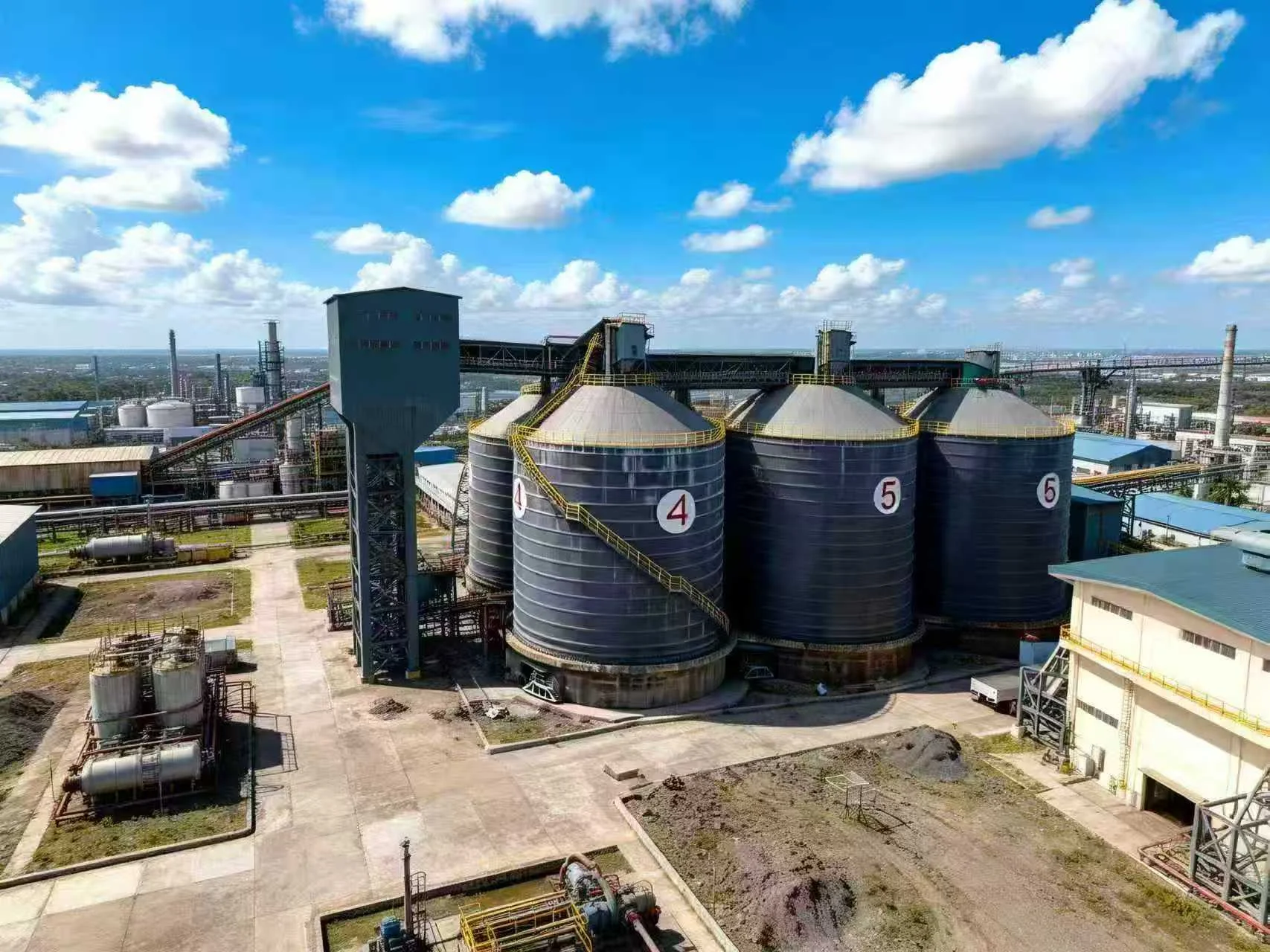
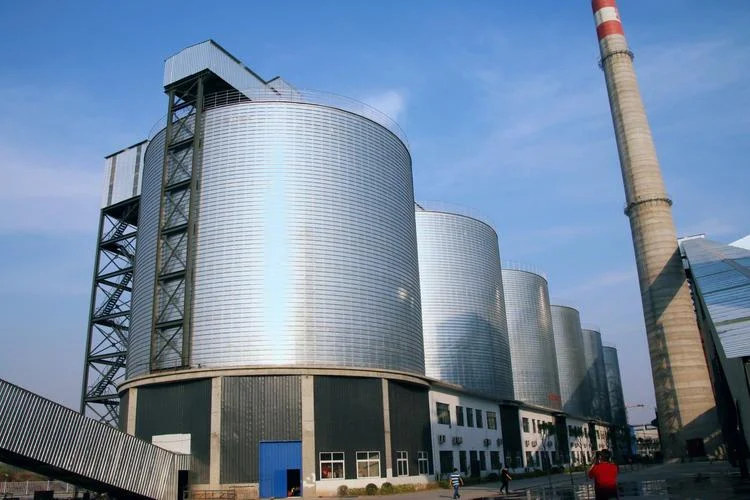
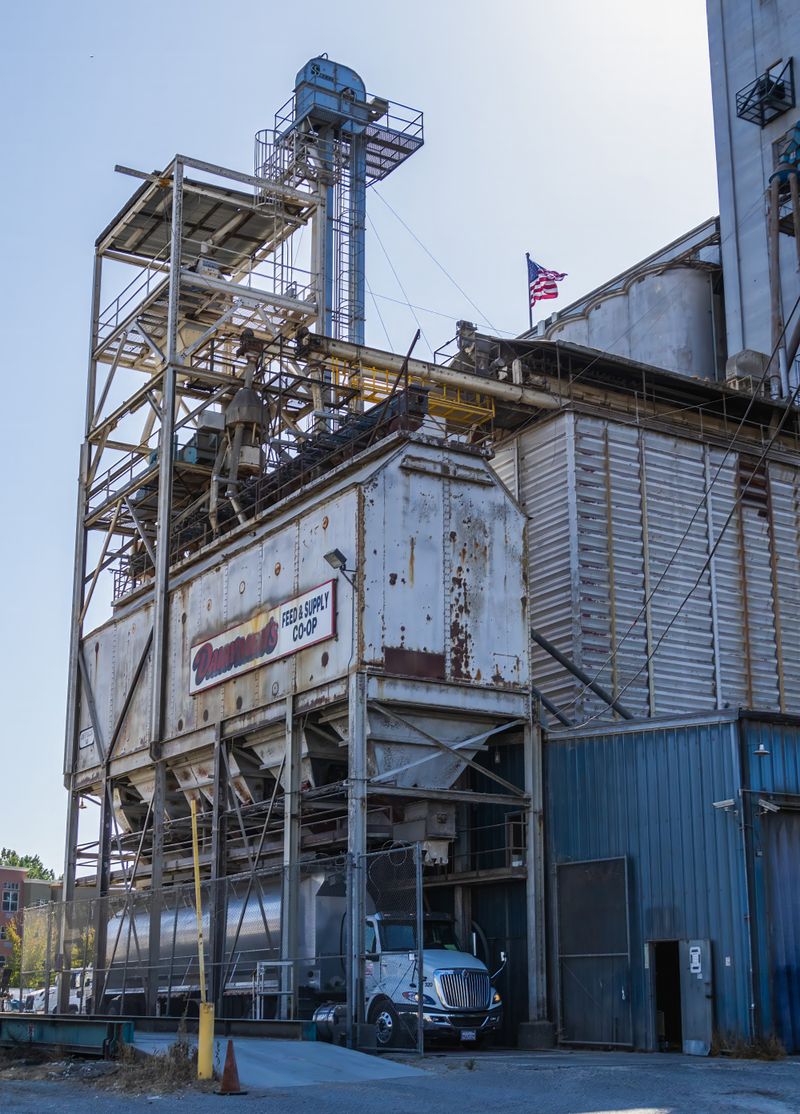
A loading station is the critical junction point where stored bulk materials - cement, grain, coal, ore, fly ash, or chemical powders - transfer from silo storage into transport vehicles. Think of it as the "checkout counter" of your entire storage operation. Everything upstream (conveyors, elevators, silos, hoppers) funnels material here, and everything downstream (trucks, railcars, barges) gets filled here.
The term covers a surprisingly wide range of configurations. At its simplest, a loading station might be a single spout beneath a silo with a truck bay and manual gate valve. At its most complex, it's a multi-lane automated facility with pre-weighing hoppers, dust collection, real-time batching software, and rail-mounted loading booms that can fill a 120-car train in under an hour.
What they all share is the same fundamental challenge: move the right amount of material into the right vehicle as fast as possible, without spillage, dust, or measurement error.
The Two Main Types: Truck Loading vs. Train Loading
Truck Loading Stations
Truck loading stations are the workhorses of regional distribution. They handle everything from 10-tonne local deliveries to 40-tonne highway haulers. The modern automated truck loading station works on a pre-batch principle:
- Pre-weighing: Before the truck arrives, the system fills a weigh hopper to the target weight (say, 28 tonnes of cement). This happens while the previous truck is still being loaded.
- Vehicle positioning: The driver pulls into the loading bay. Sensors or a traffic light system confirm the truck is correctly positioned under the loading chute.
- Rapid discharge: A hydraulically controlled gate opens, and the pre-weighed batch drops into the truck bed through a telescopic loading chute that minimizes dust and material segregation.
- Documentation: The system prints a ticket with exact weight, timestamp, material grade, and vehicle ID - no manual recording needed.
Typical cycle time: 80-120 seconds per truck. Compare that to the 15-20 minutes a conventional gravity-fed spout takes, and the productivity gains are enormous.
Train Loading Stations
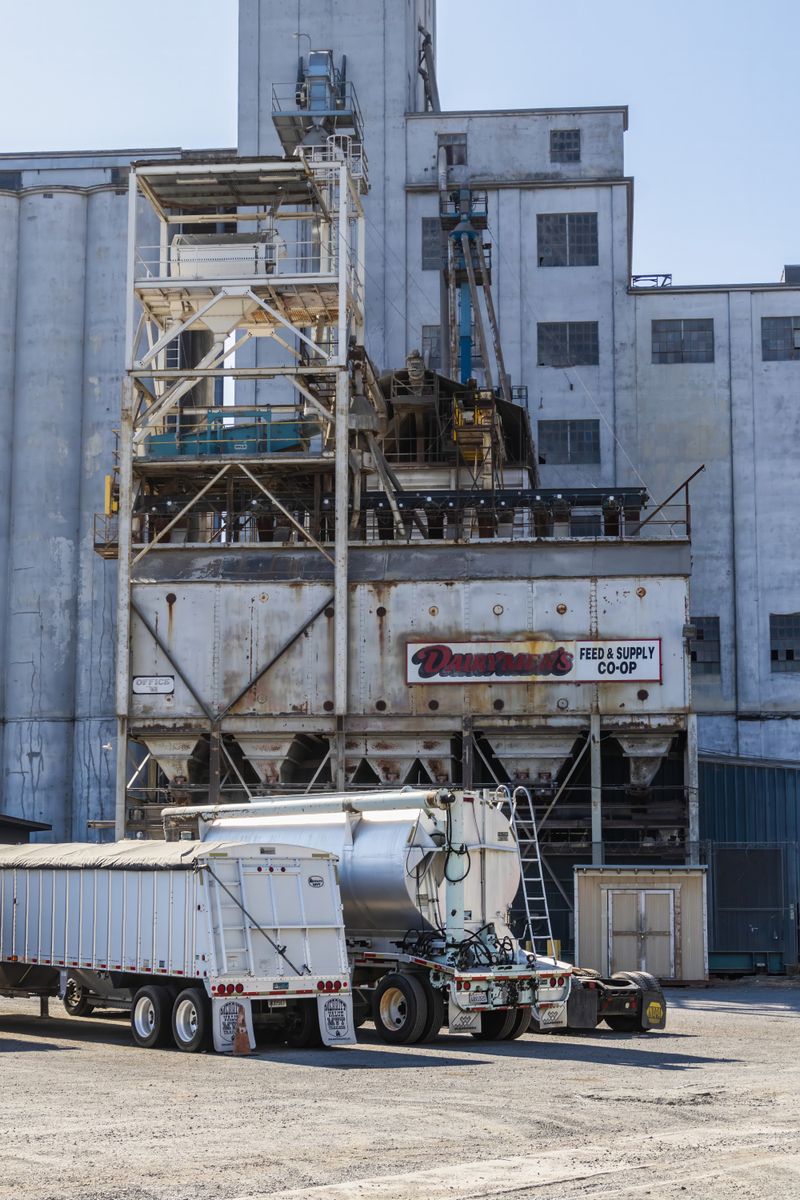
Train loading stations operate at a completely different scale. A single unit train might carry 8,000-12,000 tonnes of coal or iron ore, and rail operators charge penalties for every hour of delay. The rapid quantitative train loading system addresses this with:
- Surge bin capacity: Typically 200-500 tonnes, pre-loaded while the train approaches
- Weigh bin accuracy: ±0.5% static weighing, with real-time dynamic correction
- Loading speed: Under 50 seconds per railcar section (for C80 wagons), with a full 120-car train loaded in less than 1 hour
- Automatic train movement: The system coordinates with the train pulling mechanism so each car advances precisely to the loading position
The scale of these installations is impressive. A typical coal mine loading station might feature a 40-meter steel tower housing the surge bin, weigh bin, and loading chute, with a total structural weight exceeding 500 tonnes.
Five Design Decisions That Make or Break Your Loading Station
1. Hopper Geometry and Material Flow
This is where most loading station problems originate. Bulk materials don't behave like liquids - they form bridges, rat-holes, and dead zones in poorly designed hoppers. The solution is mass-flow hopper design, where every particle in the bin moves during discharge. Key parameters:
- Hopper half-angle: Must be steeper than the material's wall friction angle. For cement, this typically means 15-20° from vertical.
- Outlet size: Minimum 8-10x the largest particle dimension to prevent arching
- Insert devices: Flow-corrective inserts can retrofit an existing funnel-flow bin into mass-flow without rebuilding the entire hopper
2. Conveyor-to-Hopper Integration
How material enters the loading station hopper matters as much as how it leaves. A belt conveyor dumping material from 10 meters above creates impact compaction, dust clouds, and particle segregation (large particles roll to the edges, fines stay in the center). Solutions include:
- Chute liners with ceramic or UHMWPE wear plates
- Enclosed transfer points with dust extraction
- Anti-segregation devices like cascade chutes or telescopic loading arms
3. Weighing System Selection
Three options exist, each with distinct trade-offs:
| Weighing Method | Accuracy | Speed | Best For |
|---|---|---|---|
| Belt scale (weighing on conveyor) | ±1-2% | Continuous | High-volume, loose tolerance |
| Hopper scale (batch weighing) | ±0.5% | Batch (80-120s/cycle) | Truck/train loading, trade custody |
| Loss-in-weight feeder | ±0.25% | Slow-medium | Chemical additives, premium products |
For most loading station applications, the hopper scale is the sweet spot - it delivers trade-grade accuracy without sacrificing throughput.
4. Dust Control Strategy
Loading generates dust at two points: during material drop into the vehicle, and during vehicle movement as displaced air pushes fines outward. Effective dust control combines:
- Enclosed loading chutes: Telescopic chutes that extend into the truck bed, sealing the gap between chute and vehicle
- Negative pressure extraction: Bag filters at the loading point, maintaining -50 to -100 Pa inside the loading enclosure
- Intelligent spray systems: Automated dust suppressant spraying that adjusts dosage based on real-time particulate sensor readings - reducing chemical consumption by 40% compared to fixed-rate spraying
5. Automation and Control Architecture
A modern loading station runs on a three-layer control system:
- Field layer: Sensors (load cells, position switches, dust monitors, temperature probes) and actuators (gates, chutes, conveyors)
- Control layer: PLC (Programmable Logic Controller) executing the loading sequence, interlock logic, and safety shutdowns
- Supervisory layer: SCADA/HMI system displaying real-time status, generating reports, and enabling remote monitoring via web interface
The PLC handles all time-critical operations - it must close the gate within 200ms of reaching target weight, for example. The SCADA system provides the operator interface and data logging for quality assurance and regulatory compliance.
Real-World Performance Benchmarks
Based on installed projects across cement terminals, grain elevators, and coal handling facilities, here's what well-designed loading stations actually deliver:
| Metric | Truck Loading Station | Train Loading Station |
|---|---|---|
| Throughput | 2,500-3,500 t/h | 5,000-10,000 t/h |
| Cycle time | 80-120 seconds/vehicle | ≤50 seconds/car (C80) |
| Weighing accuracy | ±0.5% | ±0.5% |
| Buffer hopper capacity | 100-200 tonnes | 200-500 tonnes |
| Dust emission at loading point | ≤10 mg/m³ | ≤10 mg/m³ |
| Automation level | Full auto (1 operator) | Full auto (1-2 operators) |
Common Mistakes and How to Avoid Them
After decades of designing and installing loading stations for bulk materials, we have seen the same errors repeated across projects:
- Undersizing the surge bin: If your surge bin holds less than 2x the target vehicle load, you will have trucks waiting while the bin refills. Size it at 2.5-3x for comfortable margins.
- Ignoring vehicle variety: A loading station designed only for standard 40-tonne trucks will choke when 10-tonne local deliveries show up. Build in adjustable chute positioning and multiple target weight presets.
- Neglecting maintenance access: Gate valves, chute liners, and load cells all need regular inspection. If your design requires a crane to replace a chute liner, you have designed in 48 hours of downtime per maintenance event.
- Forgetting the approach road: The loading station is only as fast as the slowest bottleneck. If trucks queue on a single-lane approach road, your 80-second loading cycle becomes meaningless.
Environmental and Safety Compliance
Modern loading stations must meet increasingly strict environmental standards. The key compliance areas include:
- Air quality: Fugitive dust emissions below 50 mg/m3 at the property boundary (most jurisdictions)
- Noise: Loading operations typically generate 75-85 dB at 15 meters; acoustic enclosures or barriers may be required near residential areas
- Spill containment: Bund walls and drainage systems to capture any material spillage
- Occupational health: Operators in the loading area need respiratory protection during manual interventions; fully automated systems eliminate this exposure
Bottom Line
A loading station is far more than a spout under a silo. It is the operational bottleneck that determines whether your entire storage and logistics chain delivers on its investment. Get the hopper geometry right, integrate pre-weighing, automate the sequence, and invest in dust control - and you will see truck turnaround drop by 70%, weighing accuracy improve tenfold, and environmental complaints drop to zero. That is not theory; that is what happens when loading station design is done properly from day one.