
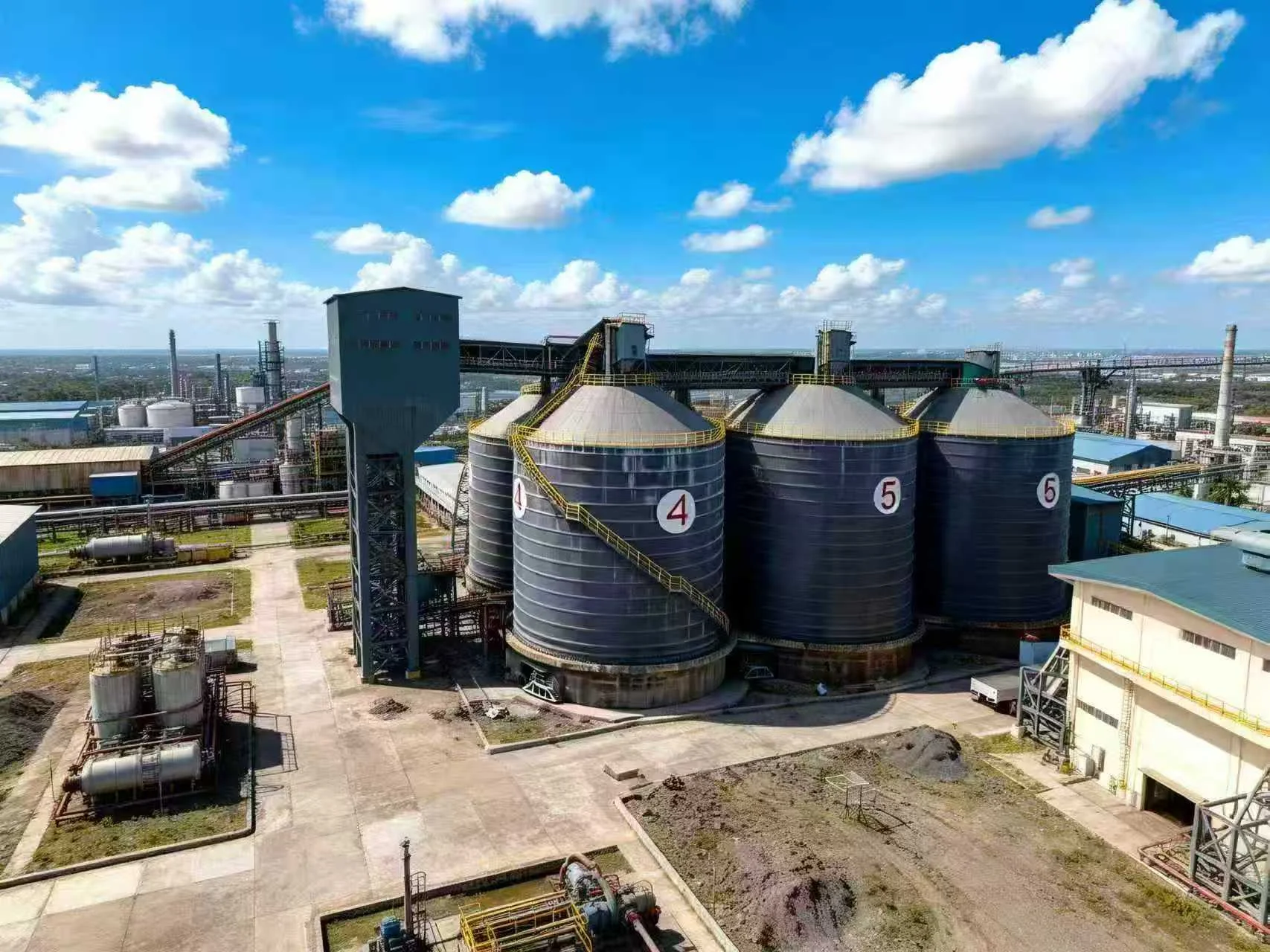
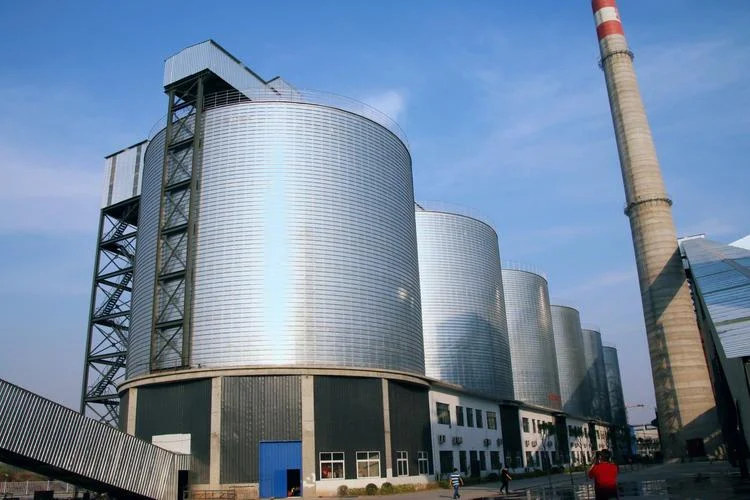


Pharmaceutical-grade silo systems for API and excipient storage require surface finishes of Ra ≤ 0.8 µm and 100% weld penetration—anything less risks contamination that can shut down a production line for weeks. Over 60% of quality deviations in oral solid dosage forms trace back to storage and handling, not synthesis errors.
Key Takeaways
- Surface Finish Matters: Internal welds must meet Ra ≤ 0.8 µm with full penetration to prevent product entrapment and bacterial growth.
- Clean-in-Place (CIP) Is Non-Negotiable: Every silo needs spray-ball coverage at 0.2–0.4 bar with documented validation protocols.
- Risk Alert: Standard carbon steel silos with liners fail FDA audits—pharma-grade stainless steel (316L or 304L) is mandatory for direct-contact surfaces.
API and Excipient Storage: Why Standard Silos Fail Pharma Audits
I've walked into too many plants where a "stainless steel silo" meant a standard grain bin with a thin 304 liner slapped inside. That's a nightmare waiting for an FDA 483 observation. For pharmaceutical-grade storage, the vessel itself must be constructed from 316L or 304L stainless steel with all internal welds ground, polished, and passivated. The surface finish needs to hit Ra ≤ 0.8 µm—anything rougher traps powder, creates cleaning validation failures, and supports biofilm formation. I've seen a single rough weld bead cause a three-month production delay while the QA team re-validated the entire system.
The geometry matters just as much. Dead spots where powder accumulates are unacceptable. Every internal angle must be radiused—minimum 10 mm radius at corners—and all gaskets must be FDA-listed silicone or EPDM. A professional manufacturer will offer a hydrostatic test certificate and a surface roughness report for every vessel. If they can't provide both, walk away. The cost difference between a pharma-grade silo and a "food-grade" silo runs roughly 40–60%, but the cost of a failed audit is ten times that.
Clean-in-Place Design: Spray Coverage and Validation Protocols
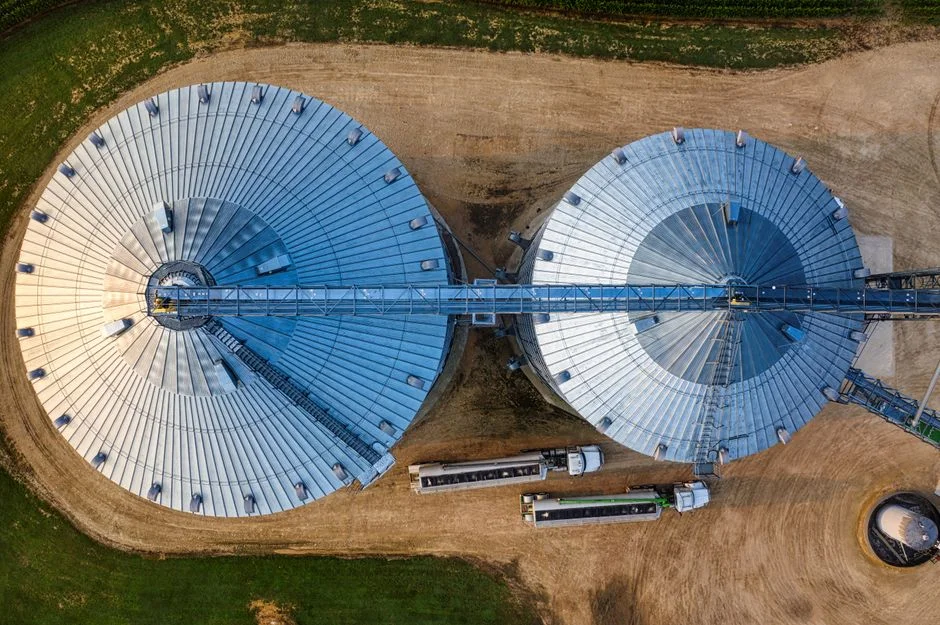
You cannot manually clean a 50 m³ silo. Full stop. Every pharmaceutical silo must be designed with a Clean-in-Place (CIP) system that delivers cleaning solution at 0.2–0.4 bar through strategically placed spray balls. The key metric is coverage: every internal surface must receive direct impingement, not just a rinse. I specify a minimum of three spray balls for silos up to 100 m³, with a documented spray pattern analysis. The CIP cycle itself should include a pre-rinse, caustic wash at 65–75°C for 15–20 minutes, intermediate rinse, acid wash, and final WFI (Water for Injection) rinse.
Drainability and Slope Requirements
The silo bottom must slope at minimum 60° from horizontal—steeper is better. Flat-bottom silos have no place in pharma API storage. The outlet should be a full-port butterfly or iris valve with no crevices. Every drain line needs to be sloped at least 2% and must not have any low points where liquid pools. I've seen a 1-inch puddle in a drain line cause a full batch rejection because the rinse water tested positive for endotoxins.
Validation Documentation Is the Real Product
Your silo system is only as good as its validation package. You need: Installation Qualification (IQ) verifying all materials and welds, Operational Qualification (OQ) proving CIP coverage and drainability, and Performance Qualification (PQ) showing three consecutive successful cleaning cycles with swab and rinse testing. If a professional manufacturer cannot supply a complete validation protocol with their silo, you're buying a liability. Budget 15–20% of the silo cost for validation support.
Material Selection, Welding Standards, and Long-Term Cost Considerations
316L stainless steel is the default choice for API storage because of its superior corrosion resistance to chlorides and acidic cleaning agents. 304L works for dry excipients stored below 40°C, but I've seen pitting corrosion in 304L within three years when used for hygroscopic APIs. All welds must be full-penetration autogenous TIG welds, not MIG. The heat-affected zone needs to be passivated with nitric acid to restore the chromium oxide layer. A professional manufacturer will provide weld maps, weld logs with operator certifications, and a ferroxyl test for each seam. The upfront cost for proper pharma-grade welding adds about 25–30% versus standard stainless fabrication, but it eliminates the risk of intergranular corrosion that can contaminate product years later.
Long-term, the biggest cost driver is not the silo itself—it's the cleaning validation re-qualification every 12 months. A poorly designed CIP system can add two weeks of downtime per year. I recommend specifying a silo with a removable spray-ball assembly and a viewing port for visual inspection. Also, consider a nitrogen blanketing system for oxygen-sensitive APIs; the payback on reduced degradation often comes within 18 months. For more on structural design principles that apply across industries, see our article on spiral steel silos engineering principles.
Frequently Asked Questions
Q: What is the difference between a pharmaceutical-grade silo and a food-grade silo?
A: The primary differences are surface finish, weld quality, and validation. Pharma-grade requires Ra ≤ 0.8 µm internal finish, full-penetration TIG welds with passivation, and a complete CIP system with validation documentation. Food-grade typically accepts Ra ≤ 1.6 µm and does not require the same level of cleaning validation. The cost difference is roughly 40–60% higher for pharma-grade due to material, labor, and testing requirements.
Q: Can I use a carbon steel silo with a stainless steel liner for API storage?
A: No. This is a common mistake that leads to audit failures. The liner welds to the carbon steel shell create crevices that cannot be cleaned or inspected. Over time, moisture can condense between the liner and shell, causing corrosion that breaches the liner. The only acceptable construction is solid stainless steel (316L or 304L) for all product-contact surfaces. A professional manufacturer will never recommend a lined vessel for pharmaceutical applications.
Q: How often should I re-validate my silo cleaning process?
A: Minimum annually, but more frequently if you change the product being stored. Each new API or excipient requires a new cleaning validation study to establish acceptable residue limits. The FDA also expects re-validation after any modification to the CIP system, including changing spray balls, pump upgrades, or altering the cleaning chemistry. I recommend budgeting for a partial re-validation every 12 months and a full re-validation every 36 months.
Q: What is the minimum slope for a pharma silo cone?
A: 60° from horizontal is the minimum for gravity discharge of powders. For sticky or cohesive APIs, I recommend 65–70°. The cone must be smooth with no flat spots or internal bracing that creates ledges. The outlet valve should be flush-mounted to prevent powder accumulation. A steep cone adds height and cost, but the alternative—manual cleaning or bridging issues—costs more in downtime.
Q: What nitrogen blanketing pressure is standard for API silos?
A: Typically 0.5–1.0 inches of water column positive pressure (about 0.02–0.04 psi). The system needs a pressure relief valve set at 1.5 inches WC and a vacuum breaker to prevent collapse during discharge. The nitrogen must be pharmaceutical-grade (99.99% minimum purity). The payback on nitrogen blanketing for oxygen-sensitive APIs is usually under two years due to reduced degradation losses.
Q: How do I verify the surface finish of my silo?
A: Use a profilometer to measure Ra value at multiple locations, including weld seams. The measurement should be taken in three directions (longitudinal, transverse, and diagonal) at each location. A professional manufacturer will provide a surface roughness map showing readings every 1 m². I also recommend a visual inspection with a borescope for internal welds. The passivation quality can be verified with a ferroxyl test—any blue spots indicate free iron that must be removed.
Looking for Professional Silo Storage Solutions?
We provide customized design, manufacturing, and installation services for steel silo systems worldwide.
Get Your Free Technical Consultation →