
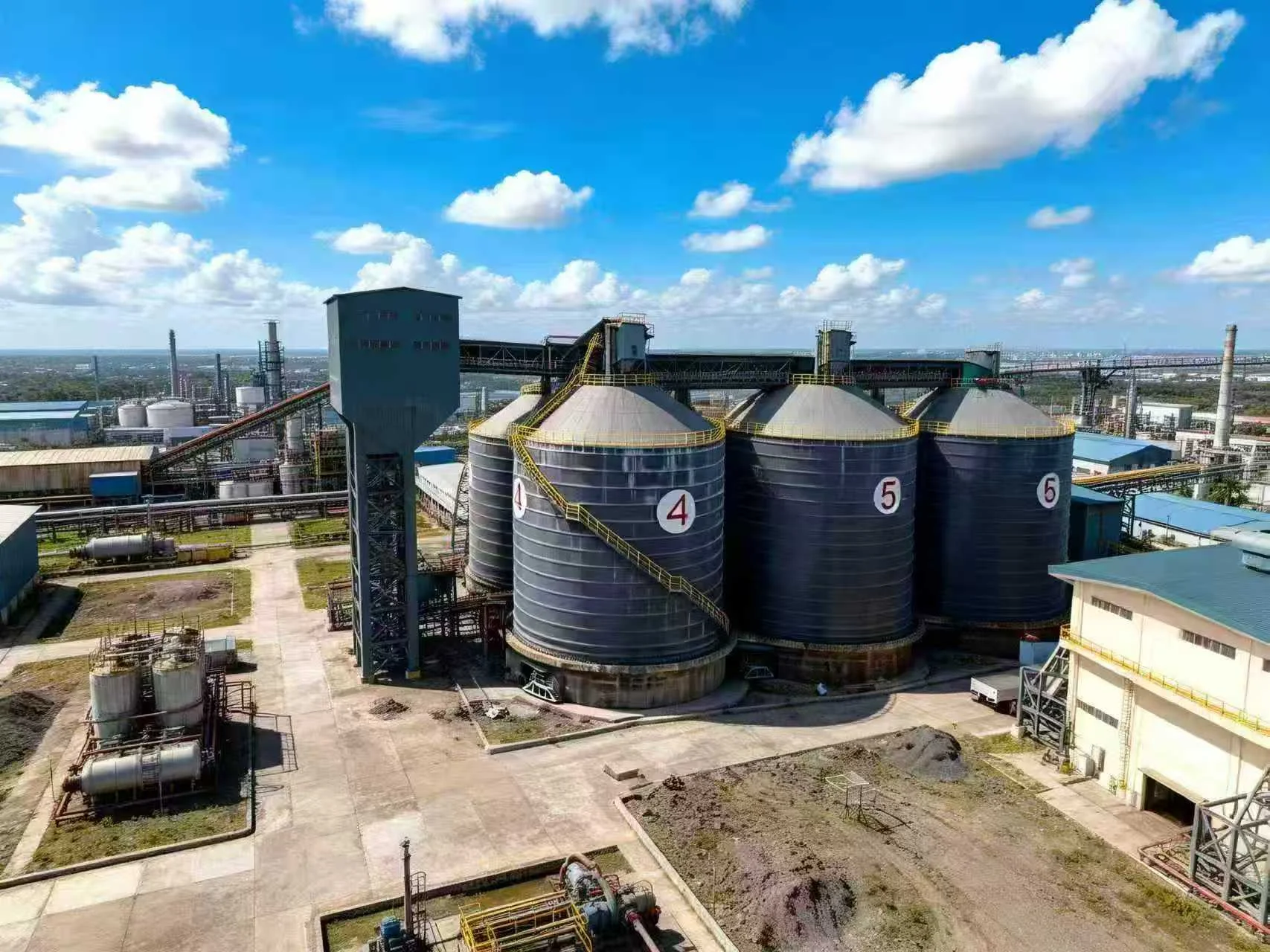
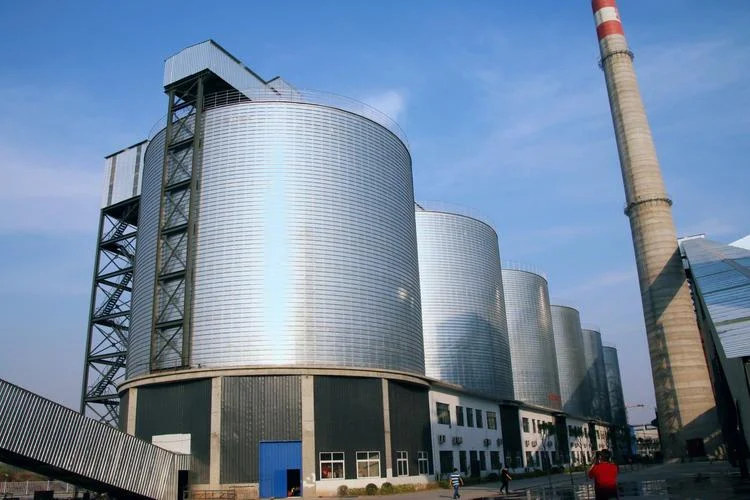


A cement station is more than a silo with a loading spout. It is an integrated facility that receives bulk cement (by rail, truck, or ship), stores it in silos, and dispatches it to customers in the most efficient way possible. Get the layout wrong, and you create bottlenecks that limit throughput by 30-50%.
Key Takeaways
Core Data Point: A well-designed cement station can process 200-500 trucks per day with a single shift of 3 operators. The key is parallel processing: one truck loading while the next positions, while silo filling continues uninterrupted.
Best Practice: Separate the receiving and dispatch functions physically. Inbound cement should enter silos from one side; outbound loading should discharge from the other. This eliminates traffic conflicts and reduces truck turnaround time by 40%.
Risk Alert: Cement stations in humid climates (Southeast Asia, coastal regions) need enclosed truck loading bays with dehumidified air supply. Open-air loading in 80%+ humidity causes cement to set in the tanker within 2-3 hours.
Types of Cement Stations
Powder Grinding Station
A powder grinding station receives clinker and other raw materials, grinds them into finished cement, and stores the product in silos for dispatch. Key components:
Raw material storage: Silos for clinker, gypsum, limestone, and slag (if blended cement)
Grinding mill: Ball mill or vertical roller mill (VRM) with separator
Product collection: Bag filter or cyclone system collecting ground cement
Finished product silo: 1-4 silos for different cement grades (OPC 42.5, OPC 52.5, PPC, etc.)
Dispatch system: Bulk loading station for road tankers, optional bagging line
Concrete Mixing Station (Batching Plant)
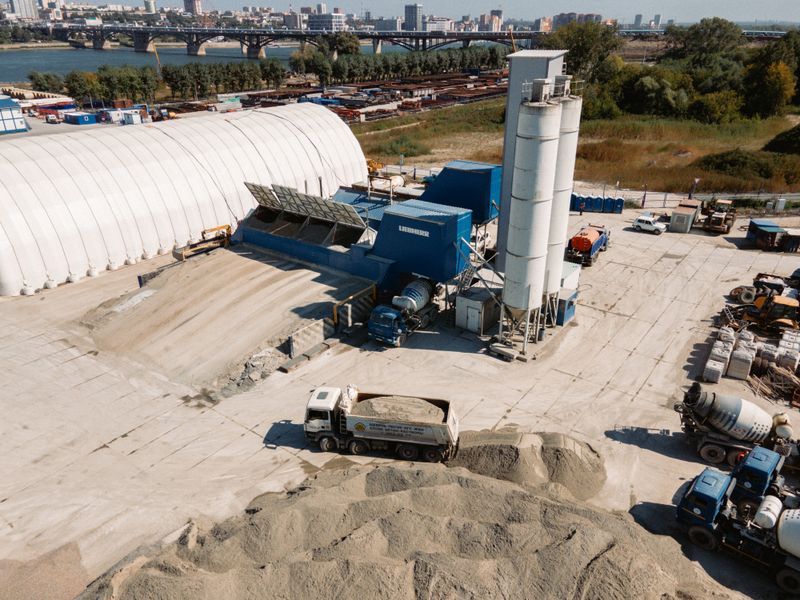
A concrete mixing station (also called a batching plant) combines cement, aggregates, water, and admixtures to produce fresh concrete. The cement storage component is critical:
Cement silo: Typically 100-500 tonnes, bolted or spiral steel silo
Weighing system: Load cells under the silo for accurate batching (+/- 1% of target weight)
Screw conveyor: Transfers cement from silo to weigh hopper at controlled rate
Dust collection: Pulse-jet bag filter on silo roof and at loading points
Cement Transfer/Distribution Terminal
A cement terminal receives bulk cement (usually by ship or rail) and redistributes it by truck. These are high-throughput facilities handling 500-5,000 tonnes per day:
Ship unloading: Pneumatic ship unloaders or grab unloaders with dust-free hoppers
Storage silos: Multiple large silos (2,000-10,000 tonnes each) for inventory management
Loading station: Automated truck loading with weighing, dust collection, and ticket printing
Control system: SCADA monitoring of silo levels, loading rates, and inventory
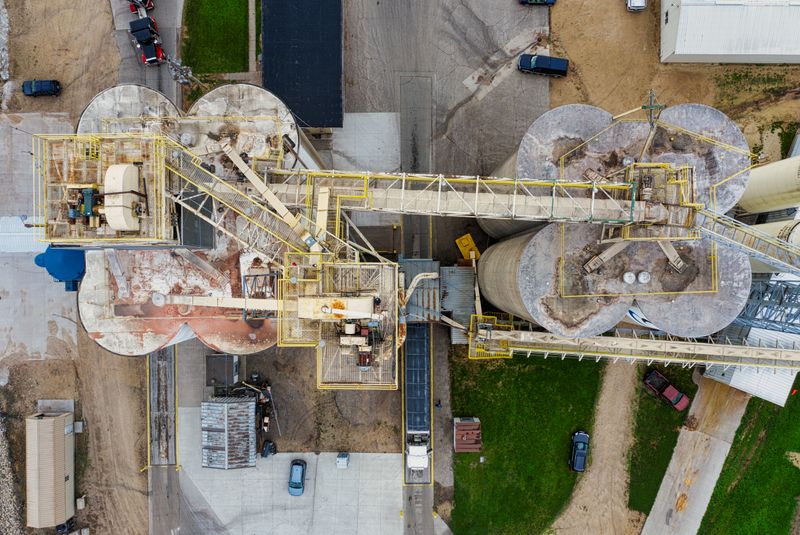
Equipment Selection Guide
| Equipment | Specification | Why It Matters |
|---|---|---|
| Cement silo | Spiral or welded, 100-10,000t | Core storage capacity |
| Screw conveyor | 219-323mm diameter, 5-80 tph | Controlled cement feed to weigh hopper |
| Dust collector | Pulse-jet, 10-50 m3/min | Prevents dust emission during filling |
| Level indicator | Radar or ultrasonic + point level | Prevents overfilling and manages inventory |
| Bulk loading spout | Telescopic, 100-300 tph | Fast, dust-free truck loading |
| Weighing system | Load cells, +/- 0.5% | Accurate batch control and dispatch records |
Bottom Line
A cement station is a logistics hub, not just a storage facility. The design must balance receiving capacity, storage volume, and dispatch throughput to match your market demand. A station that can receive 1,000 tonnes/day but only dispatch 500 tonnes/day will back up and force you to refuse deliveries. Design the entire flow path - from inlet to truck exit - as a single integrated system.