


Limestone is deceptively simple to store - until you discover that your 2,000-tonne silo has turned into a single consolidated block after the first rainy season. Moisture, particle size variation, and the exothermic nature of quicklime hydration make limestone silo design more demanding than most engineers expect.
Key Takeaways
Core Data Point: Limestone bulk density ranges from 1,200 kg/m3 (powder) to 1,600 kg/m3 (crushed aggregate). A limestone silo must be sized for the densest form to avoid structural overloading during consolidation.
Best Practice: For hydrated lime storage, install fluidizing aeration pads on the cone section and maintain a continuous gentle aeration flow (0.2-0.5 m3/min/m2) to prevent compaction and rat-holing.
Risk Alert: Quicklime (CaO) generates extreme heat when it contacts moisture. Never store quicklime in a sealed silo without venting - the steam pressure can rupture the silo shell within hours.
Understanding Limestone as a Stored Material
Limestone covers a wide range of products, each with distinct storage requirements:
Crushed limestone aggregate: 5-50mm particles, free-flowing, bulk density ~1,500 kg/m3. Minimal moisture sensitivity. Standard hopper-bottom silo works well.
Limestone powder (ground calcium carbonate): D50 = 10-50 microns, cohesive, bulk density ~1,200 kg/m3. Highly moisture-sensitive. Requires aeration and mass-flow design.
Quicklime (CaO) lumps: 10-100mm, extremely moisture-reactive. Generates heat and steam on contact with water. Requires sealed, vented silo with temperature monitoring.
Hydrated lime (Ca(OH)2): Fine powder, very cohesive, bulk density ~400-600 kg/m3 (aerated). The most challenging limestone product to store and discharge reliably.
Limestone Silo Types by Application
| Application | Capacity | Silo Type | Key Feature |
|---|---|---|---|
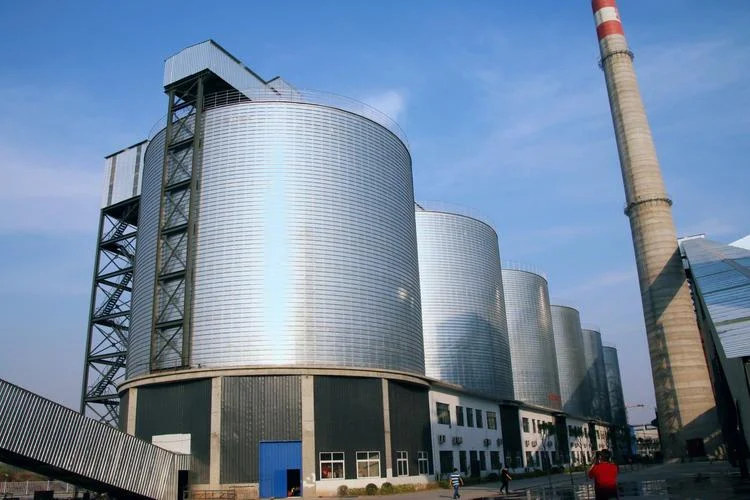
| Cement plant (raw mix) | 5,000-30,000 t | Welded flat-bottom | Live-bottom reclaim with multiple discharge points |
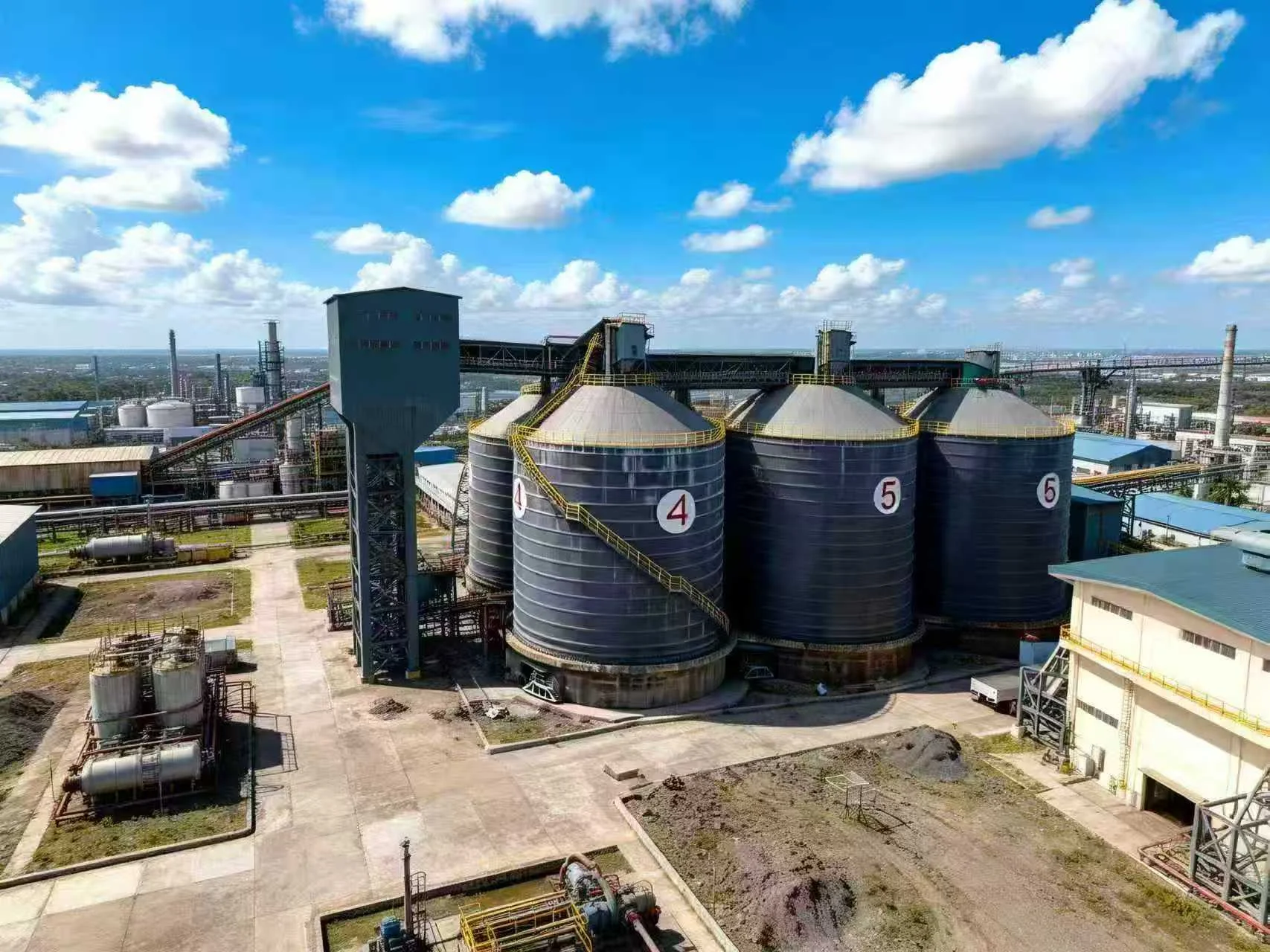
| FGD system (power plant) | 500-3,000 t | Spiral hopper-bottom | Mass-flow design, aeration pads, dust collector |
| Construction site | 50-200 t | Bolted or mobile | Quick assembly, transportable |
| Water treatment plant | 20-100 t | Small bolted | Volumetric or gravimetric feeder, enclosed discharge |
Critical Design Parameters
When specifying a limestone silo, these parameters determine success or failure:
Wall friction angle: Limestone powder on mild steel has a wall friction angle of 25-35 degrees. The hopper half-angle must be steeper than this for mass-flow. For hydrated lime, use 20-25 degrees from vertical.
Moisture barrier: Limestone absorbs 0.5-2% moisture in humid conditions. Welded shell construction with sealed roof penetrations is essential. Bolted silos require high-quality gaskets at every joint.
Discharge system: For fine limestone powder, combine aeration pads with an air cannon system. Mechanical extractors (screw reclaimers) are needed for flat-bottom silos over 8m diameter.
Dust collection: Limestone dust is alkaline and irritating. A properly sized bag filter on the silo roof (sized for peak filling rate) prevents pressure buildup and dust emission.
Bottom Line
A limestone silo is only as good as its discharge system. The material itself is inexpensive, but the cost of a blocked silo - production downtime, manual cleaning, and potential safety incidents - far exceeds the cost of proper design. Specify mass-flow geometry, aeration, and moisture protection from the start, and your limestone silo will deliver 20+ years of reliable service.